On this page
The first time I saw what a fall from a moving truck bed does to a dog, the owner swore he’d only tapped the brakes. His Australian Shepherd, Duke, was three years old, sixty-two pounds, riding loose on a stack of folded tarps because “he always rides back there, he’s fine.” The road was wet, the stop was ordinary, and Duke slid off the tailgate at maybe fifteen miles an hour. He came in with a fractured pelvis and road rash down one flank that took three weeks to heal. Nothing about that afternoon was unusual — it’s the most common version of this story I’ve treated.
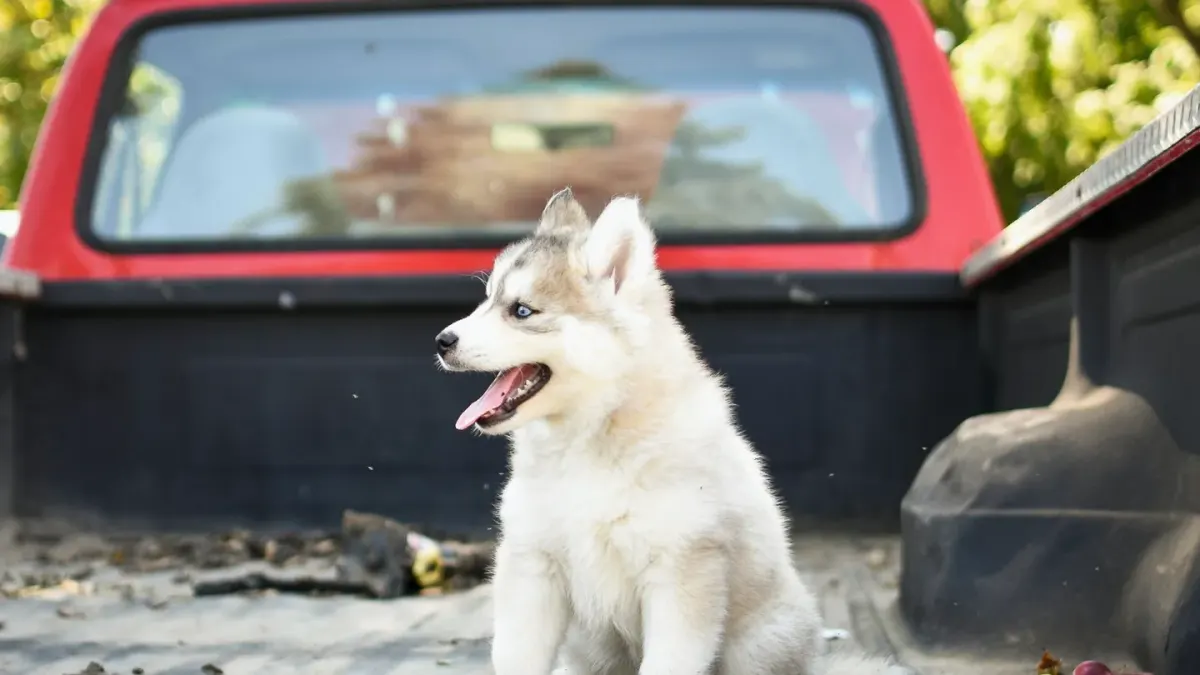
That’s the myth worth correcting up front: a dog riding in a truck bed isn’t dangerous only in a crash. It’s dangerous on an ordinary Tuesday, at ordinary speeds, doing ordinary things trucks do — braking, turning, hitting a pothole. The Safe non-commercial transport of pets in motor vehicles: American Veterinary Medical Association states plainly that dogs transported in open truck beds are at risk of severe injury, and a survey the organization cites found that truck-bed injuries in dogs tend to be severe and multiple — fractures and abrasions rather than a single clean wound.
Cab vs. bed: what the risk actually looks like
Ride in the cab, buckled into a harness attached to a seatbelt, and a dog’s risk profile in routine driving looks a lot like a human passenger’s — low, barring a real collision. Ride loose in an open bed, and the dog is exposed to three things a cab eliminates: the physics of being thrown by ordinary vehicle motion, contact with whatever else is loaded back there, and the surface itself. On a hot day, uncovered metal truck beds can reach temperatures that burn paw pads within seconds of contact, and an Dogs Traveling in Truck Beds: AVMA literature review on the subject notes that open-bed transport can also expose dogs to road dust and debris even when nothing goes wrong.
Here’s the part owners don’t expect: it isn’t loose dogs who make up the ugliest cases I’ve seen. It’s the ones who were “restrained” with a leash clipped to a bed rail. A tether that’s too long lets a dog go over the side and then keeps it there, dragging — or it catches around a leg or the neck if the dog struggles. I’ve treated a dog with permanent nerve damage in a hind leg from exactly that scenario, a rope tether that seemed sensible at the time.
The practical sequence I actually recommend
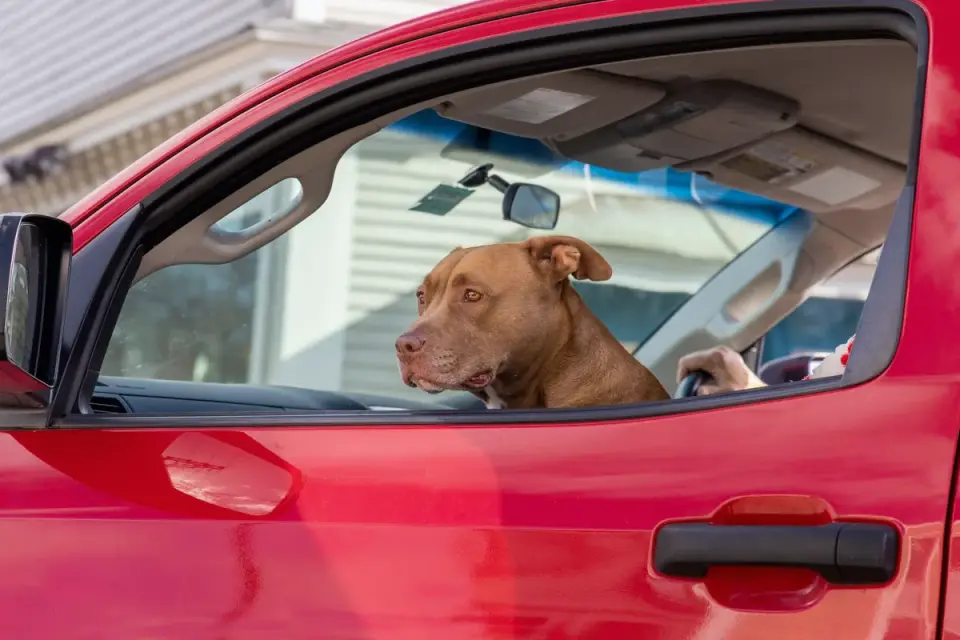
If you have any way to put the dog in the cab, do that first. A crash-tested harness clipped to the seatbelt buckle is the safest setup for routine travel, full stop — that’s the baseline I give every client before we talk about alternatives, because I’d rather start from the ceiling and negotiate down than the other way around.
If the cab genuinely isn’t an option — a work truck, a dog too large for the back seat, a multi-dog haul — then the sequence looks like this:
- Use a rigid crate, not a tether alone. The crate should be roomy enough for the dog to stand, turn around, and lie down, but not so large that the dog gets thrown side to side inside it.
- Anchor the crate to the truck bed itself, not just set it down loose. Movement during braking is where most bed injuries start, crated or not.
- Check ventilation and shade. A solid-sided, solid-top crate blocks debris but needs real airflow — this matters even more in warm weather.
- If a crate truly isn’t available, cross-tether short. The Animal Legal & Historical Center’s table of state tether laws shows several states — including New Hampshire, Maine, Connecticut, and Hawaii — now require exactly this: a crate, or a cross-tether short enough to keep all four legs inside the truck bed, not a single-point leash off the side.
- Check your state’s law before you assume it doesn’t apply to you. Requirements vary widely, and “everyone does it around here” isn’t a defense if your dog gets hurt or a citation follows.
What I tell clients who push back
I get pushback on this more than almost any other travel topic, usually some version of “my dog’s ridden back there for years and never had a problem.” I understand it — and I don’t think every owner who’s done it is careless. But absence of an incident isn’t the same as absence of risk, and the injuries I see aren’t rare freak accidents; they’re the predictable result of ordinary driving physics acting on an unrestrained or under-restrained dog. That’s the counterargument I take seriously, and it’s still not enough to change my recommendation.
I had a client last spring, a rancher with two cattle dogs who genuinely needed to ride in the truck bed for the job — there wasn’t a cab option that worked for his routine. We didn’t argue about whether the bed was ideal; it wasn’t, and I said so. Instead we got both dogs into a single rigidly anchored crate built for two, checked it for shade and airflow, and talked through why a loose tether was the one option off the table entirely. That’s the honest trade-off in most of these conversations: the goal isn’t a perfect answer, it’s the safest version of the answer someone’s actually going to use.
If you’re building out a broader travel routine — not just this one trip — our guide to getting started with dog travel walks through the prep work that makes days like this go smoother from the start.
Where I land
Cab and harness, every time it’s possible. When it isn’t, a properly anchored, ventilated crate beats any form of loose tethering, and a short cross-tether beats nothing at all. What doesn’t belong on the table is a dog riding loose in an open bed on the assumption that it’s always worked before. It usually has — right up until the day it doesn’t, and that day tends to arrive on an unremarkable drive, not a dramatic one.
Frequently asked questions
Is it ever legal for a dog to ride loose in a truck bed?
It depends on the state. Some states have no specific truck-bed restraint law, while others — including New Hampshire, Maine, Connecticut, and Hawaii — require a secured crate or a short cross-tether. Check your state's current law before assuming loose riding is allowed.
Is a tether alone safer than a crate?
Generally no. A tether that's too long, or attached at a single point, can let a dog go over the side and then drag, or catch around a leg or the neck. A rigid, anchored crate is the safer option when the cab isn't available.
What's the single safest way for a dog to ride in a pickup truck?
Inside the cab, wearing a crash-tested harness clipped into the seatbelt buckle.
Sources
- Safe non-commercial transport of pets in motor vehicles — American Veterinary Medical Association
- Dogs Traveling in Truck Beds — American Veterinary Medical Association
- Table of State Dog Tether Laws — Animal Legal & Historical Center