On this page
- What to Look for in Travel Bowls and Feeding Gear
- The Material Question: Silicone, Steel, or Something Else?
- Water Quality Is Your Real Bottleneck
- Feeding Schedules That Your Dog’s Gut Trusts
- Food Storage: Keeping Kibble Safe and Fresh
- Setting Up for Success Before You Leave
- The Bigger Picture: Prevention Over Problem-Solving
What to Look for in Travel Bowls and Feeding Gear
Before you pack, use this checklist to evaluate your feeding setup:
- Material: Food-grade silicone, stainless steel, or fabric-lined options that survive repeated folding and washing
- Stability: Weighted base or flared lip to prevent tipping in vehicles and unfamiliar rooms
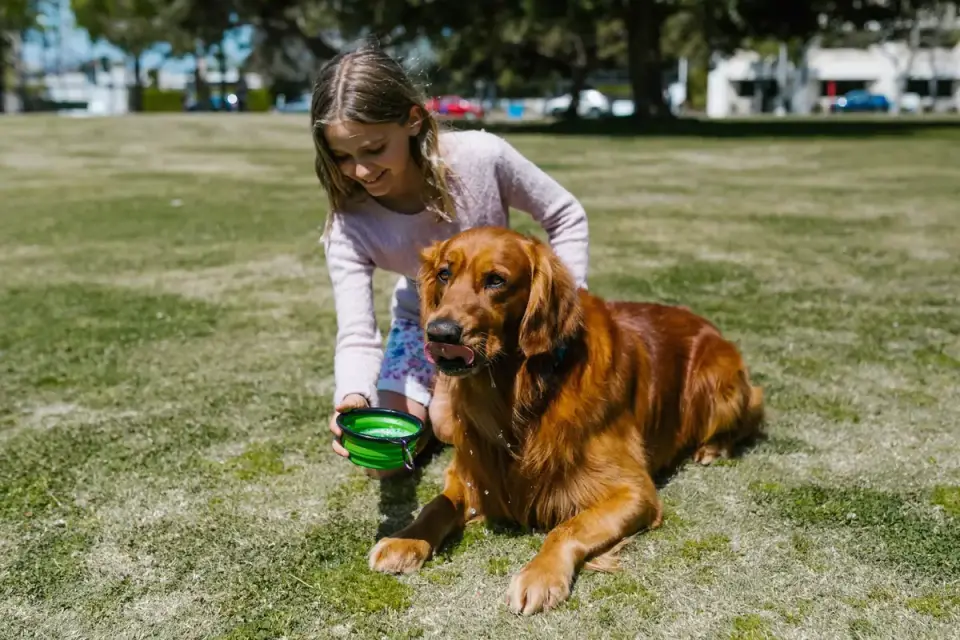
- Portability: Collapses small, weighs little, and ideally has a clip or carabiner attachment
- Water source: Always bring your own fresh water; don’t rely on unfamiliar tap water or communal bowls
- Meal timing: Keep your dog on the same schedule as at home to prevent digestive upset
- Food storage: Waterproof container with resealable bags or an airtight carrier to protect kibble
- Daily cleaning: Wash bowls thoroughly after each use to prevent mold and bacteria
I’ve watched owners show up at my clinic after a week-long road trip with a dog whose digestion fell apart—loose stools, reduced appetite, visible stress. When I ask about the feeding routine, the story is usually the same: they grabbed a cute collapsible bowl at the pet store, filled it with water from whatever source was convenient, and figured the familiar kibble would take care of itself. What they missed is that travel is a perfect storm for digestive upset. Your dog’s gut bacteria have adapted to a specific routine: the water chemistry, the meal timing, the absence of novelty. The moment you change all three at once, you’re asking a lot of that system. I worked with a boxer, Hank, whose owner decided to “treat” him to gas station water and convenience-store meals during a cross-country move. By the time they reached their new home, Hank’s digestive system had tanked—he wouldn’t eat, wouldn’t settle, and took weeks to normalize.
The Material Question: Silicone, Steel, or Something Else?
I’ve watched owners grab whichever collapsible bowl looks most Instagram-friendly, only to discover it collapses under the weight of wet kibble or develops permanent creases that trap bacteria. The material you choose determines how long the bowl will actually last and how safe it is to feed from.
Silicone bowls are lightweight, compact when folded, and flexible enough to handle repeated collapsing. The trade-off is that low-quality silicone can retain stains and odors, and some brands leach materials when exposed to hot food. Food-grade silicone—the kind labeled for freezer-to-oven use—is your baseline.
Stainless steel bowls are more durable and resist bacterial growth better than silicone, but they’re heavier and don’t collapse as small. If you’re car-camping or staying put for several days, stainless steel is worth the extra weight because it cleans thoroughly and lasts years. Veterinary guides like those from Pawp prioritize stainless steel for its durability and resistance to bacterial growth.
Fabric-lined or nylon bowls collapse to almost nothing and dry quickly, but they require more attention to prevent mold in the fabric fold. These work best for short trips or if you’re meticulous about daily cleaning.
The real trade-off isn’t brand or price—it’s between convenience (silicone compresses smallest) and durability (stainless steel cleans best). Choose based on your trip length and how much you’re willing to babysit the bowl.
Water Quality Is Your Real Bottleneck
This is where most travel plans unravel, and where your feeding routine either prevents digestive upset or guarantees it.
Dogs traveling to new places are exposed to water sources they’ve never encountered before. The risk isn’t just that the water tastes different—it’s that unfamiliar water sources can harbor parasites and bacteria that disrupt your dog’s gut. The American Kennel Club identifies several common waterborne hazards: giardia, a parasite that causes chronic diarrhea and malabsorption; leptospirosis, a bacterial infection that affects the liver and kidneys; and blue-green algae, which can produce toxins dangerous to the nervous system.
I’ve watched acute cases of giardia derail a week-long trip. A corgi puppy picked up the parasite from a dog park puddle during a road trip; within 48 hours, her owner was searching for an emergency vet in an unfamiliar city. What looked like a free water source cost them a vet visit, antibiotics, and a week of loose stools. Prevent that scenario entirely: pack bottled water or filtered water from home, refill from known sources (your hotel, a friend’s house, a bottled water dispenser), and never let your dog drink from standing water, communal bowls, or sources you can’t verify.
One family I coached through a camping trip did the opposite. They prepared like they were stocking a field hospital: they packed bottled water for the entire week, pre-portioned their dog’s kibble into daily bags, brought two collapsible bowls (one for food, one for water), and stuck to the same meal times as if they were at home. The difference was visible by day two. Their golden retriever, Sadie, settled into camp, maintained her appetite, and came home with perfect stools. The owners swore it was overthinking it. To me, it was preventing the problem instead of fixing it.
Feeding Schedules That Your Dog’s Gut Trusts
Your dog’s digestive system thrives on predictability. At home, she probably eats at the same time every morning and evening; her gut bacteria have adapted to that rhythm. Travel disrupts every variable at once: new water, new food sources (some dogs get tempted by roadside food or restaurant scraps), travel stress, and often shifted meal times because you’re driving or adjusting to a new time zone.
Keep your dog on the same meal schedule as she follows at home. If she normally eats at 7 a.m. and 6 p.m., maintain those times even if you’re sleeping in or driving. If she eats twice daily, don’t “simplify” to once daily because you’re on the road. The consistency is your leverage for preventing digestive upset.
I’ve watched owners make the mistake of feeding their dog less frequently during travel, assuming that fewer meals equal fewer opportunities for trouble. The opposite usually happens: the dog’s digestive system responds to the schedule change with loose stools or stress-related refusal to eat. Stick to normal portions at normal times.
If your dog eats fresh food or has a specific prescription diet, pack enough for the entire trip. Abruptly switching your dog’s food—even to a premium option—can cause stomach upset. If you can’t pack enough, contact the brand in advance to ask if a local store or veterinary clinic carries it, or call ahead to your destination to arrange pickup.
Food Storage: Keeping Kibble Safe and Fresh
Moisture and pests are the enemies of kibble in transit. Store your dog’s food in a waterproof, airtight container. Small resealable bags (the kind used for freezing) work well for daily portions; pack one bag per meal so you can easily see how much food you’ve used and how much you have left.
If you’re traveling to a humid climate or for more than a week, consider packing slightly less kibble and planning to buy fresh supplies at your destination. Kibble stored in a damp environment can develop mold or rancidity that will make your dog sick or simply refuse to eat.
Keep the container away from direct heat and sunlight. A hot car trunk can render kibble inedible within hours.
Setting Up for Success Before You Leave
The best way to prepare is to get your dog a pre-travel veterinary checkup. For a complete preparation checklist, see Getting Started With Dog Travel: A Practical Prep Guide. A pre-trip exam gives you a chance to:
- Address any underlying conditions (joint pain, mild gastric sensitivity, medication needs) that travel might aggravate
- Confirm that your dog’s vaccinations are current
- Ask your vet about any region-specific health risks (tick-borne illnesses, parasites common to your destination)
- Get a copy of your dog’s medical records in case you need emergency care
Two weeks before you travel, practice using your portable bowls and feeding gear at home. Collapse and set up the bowl a few times. Practice washing and drying it quickly. Identify any problems (wobbling, sharp edges, slow drying) while you’re still at home, not on day two of your trip.
Pack your collapsible bowls, fresh water, and pre-portioned food the night before departure. Bring a small travel kit of your dog’s usual treats, in case you need to redirect stress or boredom during the trip.
The Bigger Picture: Prevention Over Problem-Solving
As you prepare for travel, think of your feeding setup the way I think of preventing joint issues in working dogs: it’s about reducing variables, not about special gear. A senior dog’s knees stay more stable if her weight is managed and her movement is predictable; your traveling dog’s digestion stays stable if the water is safe and the meal times don’t shift. This is preventive work. It sounds unglamorous compared to a sleek collapsible bowl with a carabiner clip, but it’s the reason some dogs thrive on the road while others spend the first three days recovering. The bowl itself is just your tool for that stability.
Sources
- Communal Water Bowl Safety — American Kennel Club
- Vet's Favorite Things: 17 Vet-Approved Pet Products For Travel — Pawp