On this page
- The myth: “car safety harness” means it passed a safety test
- What the actual 2013 study measured — and why there was no “pass”
- What CPS certification looks like now
- A practical sequence for buying and fitting a crash-tested restraint
- The counterargument I take seriously — and why I still land where I do
- Where this leaves you
The limitation that surprises almost every owner isn’t the price of a good harness — it’s finding out there’s no law requiring any of this gear to survive a crash at all.
Here’s the checklist I hand clients before they buy anything that clips into a seatbelt:
- Confirm it’s actually crash-tested, not just “car-safe” marketing language on the packaging
- Look for a named lab and a named standard, not a vague claim of “tested”
- Match the rated weight to your dog, not just the harness size
- Check whether it was tested as a harness alone or in a full carrier/crate system
- Ask what “pass” meant — some studies published rankings with no pass threshold at all
- Budget for a fitting session, because a crash-rated harness fitted loosely performs like an untested one
I’ll expand on each of those below, but the short version of my recommendation: if a product doesn’t name the Pet Carrier & Crate Crash Test Research: Center for Pet Safety anywhere in its materials, I don’t consider it crash-tested — I consider it untested with confident packaging.
The myth: “car safety harness” means it passed a safety test
Most harnesses sold as “car safety harnesses” have never been in a sled test. There is no federal crashworthiness standard for pet restraints the way there is for child car seats, so any manufacturer can print “safety harness” on a box without independent verification. The Center for Pet Safety — a nonprofit that has done the actual crash-sled testing on pet products since 2011 — has been blunt about the gap: almost every harness it has tested has failed, some catastrophically, meaning the dog was thrown or the harness broke apart on impact.
That’s the reality behind the checklist item about naming a lab. “Crash-tested” is a claim, not a certification, unless a specific organization stands behind it.
What the actual 2013 study measured — and why there was no “pass”
CPS ran its landmark harness study in 2013, testing eleven products against a performance standard it had developed itself, since no industry standard existed yet. According to the 2013 Harness Study Results, the agency used head-excursion measurement — borrowed from the federal child-seat standard FMVSS 213 — as its main metric, tracking how far a test dummy’s head traveled forward on impact. Because there was no pre-existing pass/fail line, CPS ranked products relative to each other, and the top performer effectively became the baseline for what a “good” harness should do.
That study is why I tell clients to ask what a rating actually measured. A harness that’s “crash-tested” against an internal ranking system is meaningfully different from one that’s been certified against a published standard with real minimums.
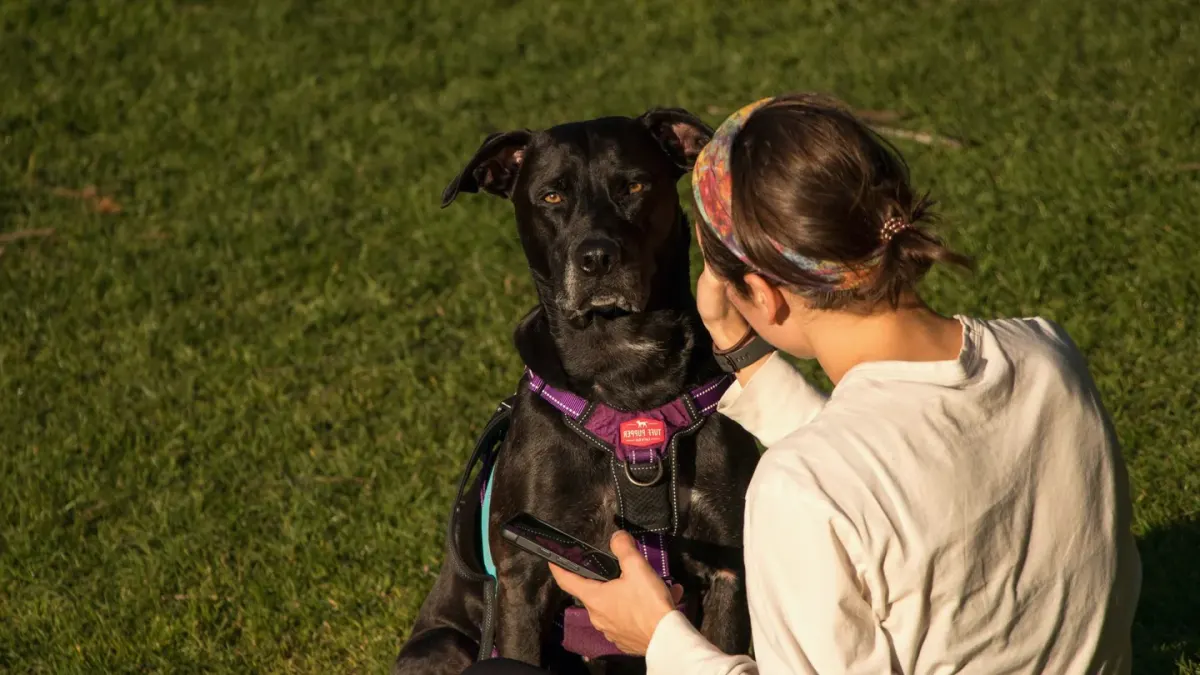
In my practice, the harness question almost never comes up until something else has already gone wrong. I had a client bring in a 55-pound mixed-breed dog, about four years old, after a hard highway stop — no collision, just an emergency brake at speed. The dog had been riding loose in the back seat and ended up wedged against the center console, favoring a front leg for two days afterward. Nothing was broken, but the owner was shaken enough to ask me, right there in the exam room, what she should actually buy. I didn’t have a product name ready — I had a checklist, the same one I still use, because the honest answer is that most of what’s sold at pet stores hasn’t been tested at all. She left with a rated-harness brand name and instructions to fit it snug enough that two fingers, not a full hand, fit under the strap.
What CPS certification looks like now
Since that first study, CPS has moved toward formal certification rather than one-off rankings. Per the Center for Pet Safety Certified program page, products that pass CPS’s crash-test protocol — including U.S., Canadian, and EU child-restraint-adjacent standards — earn a certification mark, and CPS states that certified harnesses have historically been rated for dogs up to 110 pounds. This is the closest thing the category has to a real seal of approval, and it’s still voluntary: a manufacturer has to submit a product and pay for the testing.
That voluntary structure matters for the checklist item about weight ratings. A harness certified for dogs up to 110 pounds hasn’t necessarily been tested at every weight in between — check the specific weight class your dog falls into, not just the top number on the box.
A practical sequence for buying and fitting a crash-tested restraint
- Search the product name plus “Center for Pet Safety” before you buy — if nothing comes up, treat the “safety” language as unverified.
- Check the rated weight range against your dog’s actual weight, not breed-standard weight — a lean or overweight dog changes the math.
- Fit the harness in your driveway first, not on travel day, and test the two-finger snugness rule at the chest and neck straps.
- Anchor it to a seatbelt or ISOFIX-style connector, not just a loose tether, since slack defeats the crash-tested geometry.
- Re-check fit every few months, especially for growing dogs or dogs whose weight has shifted — a harness that fit in spring may sit differently by fall.
This is also where the AAA SoCal: AAA/Kurgo Pet Traffic Safety Survey Fact Sheet is worth knowing: more than 80% of drivers surveyed recognized the danger of an unrestrained dog in the car, yet only 16% actually used any kind of restraint. The gap isn’t awareness — it’s follow-through, and fit is usually where that follow-through breaks down.
The counterargument I take seriously — and why I still land where I do
The honest pushback is this: even a CPS-certified harness is tested in a controlled sled crash, not a live multi-vehicle collision, and no restraint eliminates injury risk entirely. I don’t dismiss that. Structure/function language matters here — a crash-tested harness is designed to reduce excursion and keep a dog contained, not to guarantee an outcome in every crash scenario. I’ve had colleagues argue that a well-secured travel crate in the cargo area is inherently more protective than any harness, and for larger vehicles, that’s a reasonable position.
Where I still land: for most sedans and mid-size SUVs, a CPS-certified harness anchored to a seatbelt is the most realistic option owners will actually use correctly and consistently — and consistent, correctly fitted use is what the evidence-backed testing is measuring in the first place. A theoretically safer crate that sits in the garage because it’s inconvenient protects no one.
One short truth I give every client before they leave the exam room: the safest restraint is the one you’ll actually use on every drive, not just the long ones.
If you’re building out your travel setup from scratch, it’s worth pairing this with a broader prep pass — our Getting Started With Dog Travel guide walks through the rest of the pre-trip checklist beyond restraints.
Where this leaves you
I’ve watched enough near-misses in the exam room to be firm about this, even while I acknowledge the limits of the testing: buy the harness with a named lab and a real weight rating behind it, fit it like you mean it, and don’t let a comfortable-looking product substitute for one that’s actually been crash-tested. The American Veterinary Medical Association: AVMA has been candid that data and regulation in this space are still catching up to demand — which means, for now, the responsibility for choosing well sits with the owner, not the label.
Frequently asked questions
Is any dog harness legally required to be crash-tested?
No. There's currently no federal crashworthiness standard for pet car restraints, which is why independent testing from organizations like the Center for Pet Safety is the main way to compare products.
What weight of dog can a CPS-certified harness handle?
Certified harnesses have historically been rated for dogs up to 110 pounds, but always check the specific product's rated range against your dog's actual weight rather than assuming the top number applies.
Is a crate safer than a harness for car travel?
Both can be safe when properly anchored and correctly sized. Crates secured in a cargo area are a reasonable option for larger vehicles, while a certified harness anchored to a seatbelt tends to be the more practical choice for sedans and back seats.
Sources
- Pet Carrier & Crate Crash Test Research — Center for Pet Safety
- 2013 Harness Study Results — Center for Pet Safety
- Center for Pet Safety Certified — Center for Pet Safety
- AAA/Kurgo Pet Traffic Safety Survey Fact Sheet — AAA SoCal
- Data, safety regulations lacking when it comes to pets and vehicles — American Veterinary Medical Association