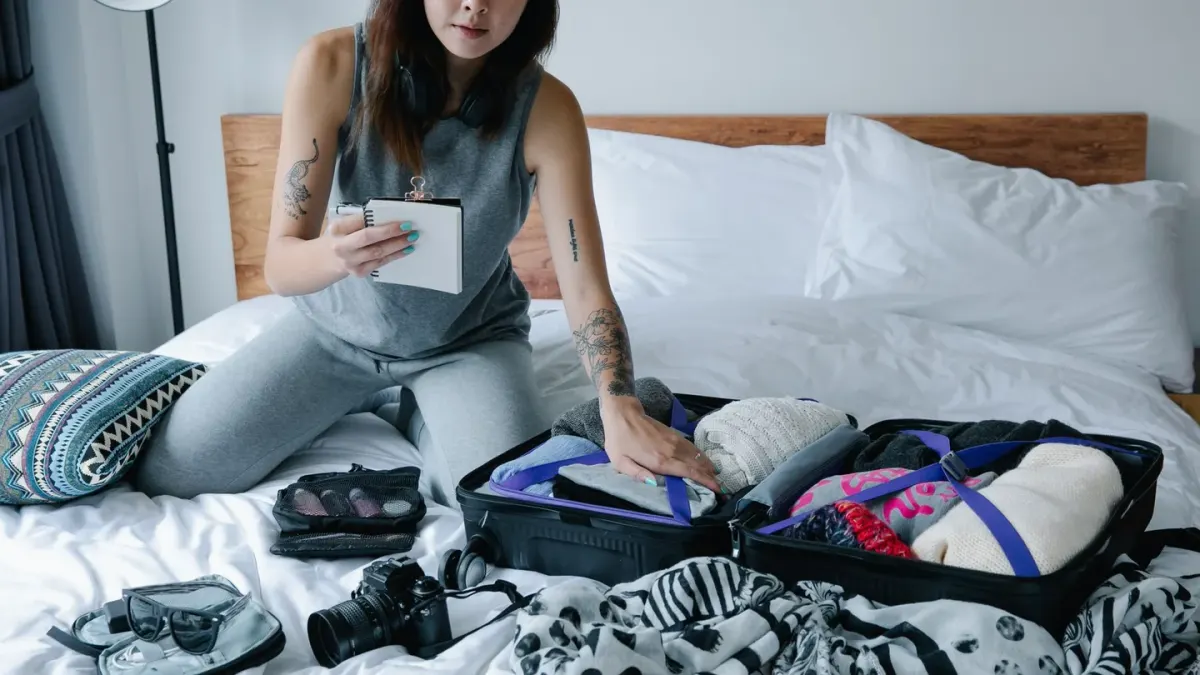
Why does a dog start panting and pacing the moment the suitcase comes out — days before you’ve even said goodbye?
Because dogs read sequences, not calendars. The suitcase, the specific shoes, the Uber app opening on your phone — these become predictors of departure long before the door closes, and by the time you’re actually leaving, the anxious response is already in full swing. That’s the piece most owners miss when they try to fix separation anxiety the night before a trip.
In my practice, one of the dogs I worked with most memorably was a four-year-old Cattle Dog mix named Ranger, about 42 pounds, whose owner was booking a ten-day trip to Portugal. She’d noticed the problem three weeks out: the moment she pulled her carry-on from the closet, Ranger would start shadowing her from room to room, refusing food, and pinning his ears when she picked up her keys. He’d never had accidents in the house before, but the week before her flight he had two, both near the front door. We didn’t have time for a full behavior-modification program, so we focused on what was achievable in three weeks — decoupling the suitcase from actual departure by staging it out for hours at a time with no leaving attached, and building a longer-duration alone-time tolerance using short, deliberately boring practice absences. By the time she left, Ranger wasn’t cured, but he was eating his puzzle feeder calmly when she picked up her keys, which was the marker we were watching for.
Myth vs. reality: what actually eases pre-travel anxiety
The myth is that a new toy, a calming chew, or an extra-long walk the morning of departure will meaningfully lower a dog’s separation stress. The reality is closer to what ASPCA describes: durable change comes from gradually accustoming a dog to being alone, starting with separations short enough that the dog stays under threshold, then slowly extending duration over many sessions. A tired dog or a stuffed Kong can take the edge off a single afternoon, but neither rewires the underlying alarm response that fires when you leave. That takes repetition, not intensity.
The same logic applies to departure cues — the keys, the specific jacket, the suitcase itself. AKC notes that dogs learn to associate these small rituals with abandonment, which is exactly why practicing them divorced from an actual departure — picking up your keys and then sitting back down, zipping the suitcase and leaving it by the door for a day — can blunt their power over time.
A practical sequence, three to four weeks out
Start earlier than feels necessary. Here’s the order I actually walk clients through when a trip is coming up:
- Weeks 3–4 before departure: Identify the specific pre-departure cues that trigger your dog — shoes, keys, a particular bag — and practice them in isolation, several times a day, with no actual leaving attached.
- Weeks 2–3: Begin short, real absences. Step outside for 30 seconds, then a few minutes, building duration only as fast as your dog stays calm — not on a fixed daily increase.
- Week 1: Extend absences to match a realistic chunk of your actual travel day — an hour, then two — and introduce whatever caregiver, sitter, or boarding routine your dog will experience while you’re gone, so it’s not also new.
- Final days: Keep departures low-key. No prolonged, emotional goodbyes — a calm exit is easier for an anxious dog to tolerate than a dramatic one, even though it can feel colder to the owner.
If your travel plans include a carrier or crate as part of the trip itself, that acclimation needs its own runway — our guide on getting a dog used to a travel carrier before flying walks through timing that alongside separation work rather than after it.
A dog that’s never spent a night away from you needs more lead time than one who already tolerates a dog walker.
Where I land, and the trade-off I won’t pretend away
My honest recommendation is to start this process three to four weeks before any trip that involves an unfamiliar caregiving arrangement, not the weekend before. The strongest counterargument I hear from clients is time — most people don’t decide to travel with a month’s notice, and plenty of dogs travel fine without a formal desensitization plan. That’s true. But the dogs I’ve seen struggle hardest aren’t the ones whose owners started “too early” — they’re the ones whose first real absence coincided with a stranger, a new environment, and a ten-day trip, all stacked on the same week. If you genuinely can’t get three weeks, compress the sequence above into what you have and prioritize the caregiver introduction and departure-cue practice over duration — those two moves do the most with the least time.
I’ve also had clients ask whether a calming supplement solves this on its own. Some structure/function products marketed for situational stress may help support a calmer baseline in a dog that’s already tolerating short absences, but none of them replace the desensitization work itself — think of them as lowering the volume on a response you’re still actively retraining, not as a substitute for the retraining.
If your dog’s anxiety is severe — self-injury, panic-level vocalizing, destruction focused on exits — that’s beyond what a pre-trip desensitization plan alone should be asked to fix, and it’s worth a conversation with your veterinarian about a referral to a board-certified veterinary behaviorist before you book anything.

For puppies specifically, the timeline compresses differently — young dogs haven’t yet learned that you reliably return, so first travel experiences carry their own considerations. Our companion piece on traveling with a puppy for the first time covers that separately. And if the trip itself involves flights, it’s worth checking airline pet policies early enough that logistics don’t collide with your desensitization timeline.
Looking ahead, the dogs who travel best aren’t the ones with the fanciest gear — they’re the ones whose owners treated the weeks before departure as training time, not just packing time. Start the sequence sooner than feels necessary, keep it boring and repetitive, and let the calm goodbye be the whole point.
Frequently asked questions
How far in advance should I start easing my dog's separation anxiety before a trip?
Three to four weeks is a realistic minimum for dogs with an unfamiliar caregiving arrangement ahead, since desensitization to alone-time works through gradual, repeated short absences rather than a single long session.
Will a calming chew or supplement fix separation anxiety before travel?
Some products may help support a calmer baseline once a dog already tolerates short absences, but they aren't a substitute for the gradual desensitization process itself.
What's the biggest mistake owners make right before leaving?
Making departures emotional and prolonged. A calm, low-key exit is easier for an anxious dog to tolerate than a dramatic goodbye, even though it can feel abrupt to the owner.