On this page
- The Short Answer: Back Seat Only
- The Physics and the Airbag Problem
- Crash Physics and Projectile Risk
- Driver Distraction
- State Laws and Legal Compliance
- Why Dogs Jump: The Open-Window Risk
- The Safer Path: Back-Seat Restraints
- Practical Steps for Safe Front-Seat Avoidance
- The Real Outcome: What Owners Who Have Made This Shift Tell Me
The Short Answer: Back Seat Only
I see this choice come up regularly in my practice. An owner loads their golden retriever, Murphy, into the front passenger seat for a quick trip to the coffee shop. Murphy is six years old, seventy pounds, and has ridden shotgun hundreds of times without incident. The owner figures that because nothing bad has happened yet, nothing will. But then I ask one question: “If someone ran a red light and hit you at forty miles per hour, would you want your dog—unrestrained and facing a deploying airbag—to survive that moment?” The answer almost always shifts their thinking. It is not about occasional trips or perfect driving; it is about the physics and the technology that fill that passenger space. The front seat was never meant to protect a dog. Every safety feature in a car—the airbags, the crumple zones, the restraint systems—was engineered for adult human bodies. A dog’s skeleton, muscle structure, and body mass bear a completely different load. The question is not whether your dog seems comfortable; it is whether the car itself is equipped to keep your dog alive if something goes wrong.
Checklist: Front-Seat Safety Concerns
- Airbags deploy directly into the front passenger zone at 200+ mph, designed for adult human physiology
- An unrestrained dog becomes a projectile in a crash; a 75-pound dog at 30 mph exerts roughly 2,250 pounds of force
- Driver distraction (even glancing at a dog) mirrors the impact of texting and increases accident risk significantly
- Dogs may jump from open windows if startled, regardless of how well they usually ride
- Some states enforce distracted driving laws that can apply to front-seat pets
- A few states require restraints; compliance is clearer in the back seat
The Physics and the Airbag Problem
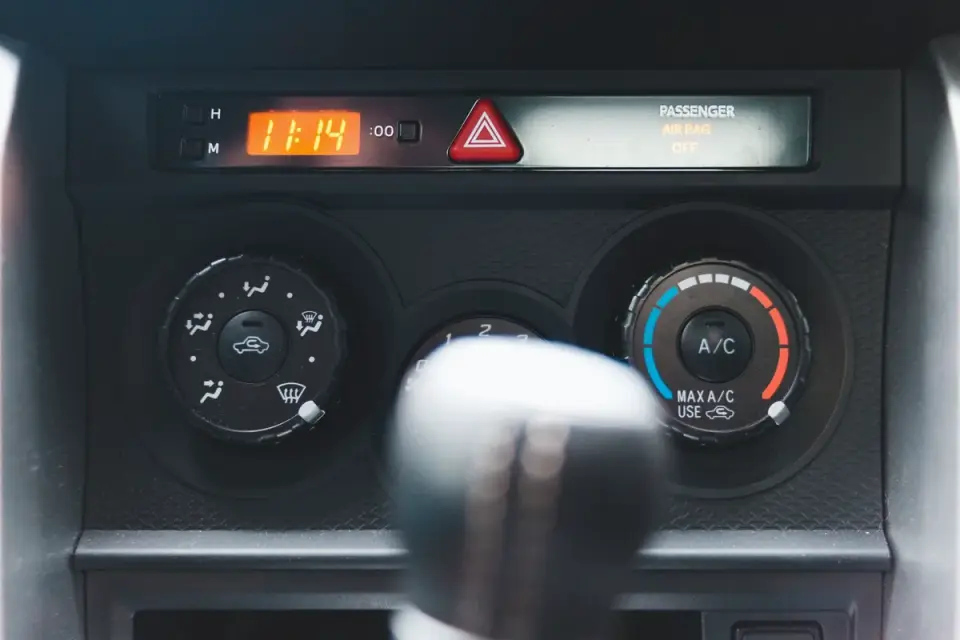
The single most dangerous element of the front seat is the airbag. According to Can Dogs Ride in the Front Seat? Vet-Reviewed Safety Considerations: Dogster, it is designed to inflate at over 200 miles per hour to cushion an adult human’s impact. A small dog, especially any breed under thirty pounds, will sustain severe injury—often fatal—from that force. Even a large dog’s body is not built to absorb that shock the way a human torso is. I worked with a cocker spaniel, Bella, whose owner felt confident because she had trained the dog to sit still. At a stoplight, another car ran through and clipped the rear corner of the vehicle, but it triggered the passenger airbag anyway. Bella was not facing direct impact, and she wore a harness, but the airbag inflated and caught part of her front end. Her owner rushed her to emergency care. Bella survived, but with fractured ribs and severe bruising. The vet there told me later that another few inches and the outcome would have been catastrophic. That is the risk of the front seat: it is not about likelihood; it is about consequence. If the airbag deploys, your dog will get hurt.
Crash Physics and Projectile Risk
Beyond the airbag, there is the basic math of motion. If a dog weighs seventy-five pounds and the car is traveling at thirty miles per hour when it crashes, that dog exerts approximately 2,250 pounds of force on whatever is in its way. According to What You Need to Know About Dog Car Restraints: AAA, that is the force of a cannonball. An unrestrained dog becomes a projectile that can injure itself, the driver, and your passengers. Even if the front-seat passenger zone does not take the direct impact, any sudden deceleration will send an unsecured dog flying. The dog hits the windshield, the dashboard, or your body—each outcome is severe. Restraints are not a convenience; they are a physics intervention. A crash-tested harness that is properly anchored to the seat belt system, or a crate rated for vehicles, converts that 2,250 pounds from an uncontrolled projectile into a restrained load that the car’s structure is designed to absorb. The back seat, combined with the right restraint, gives a dog both distance and protection in the event of a crash.
Driver Distraction
A dog in the front seat is a distraction by its nature. If your dog shifts, whines, wants your attention, or reacts to something outside the window, you will glance at it. At fifty-five miles per hour, a five-second glance covers roughly 360 feet—nearly a tenth of a mile. That is ground you travel blind. In that time, a child can dart into the road, a cyclist can swerve into your path, or another car can change lanes without signaling. The legal consequence can be real: distracted driving laws in several states, including Arizona, Hawaii, and Connecticut, can apply to drivers who operate a vehicle with a dog in their lap or seated beside them where it might demand attention. Even without legal consequence, the safety consequence is immediate. I counsel owners to think of a dog in the front seat the same way they would think of a toddler in that seat—as a direct distraction from the primary task, which is driving safely. The back seat solves this. When a dog is restrained in the back, your hands and eyes stay on the road.
State Laws and Legal Compliance
The legal picture is fragmented but tightening. According to Is It Illegal for Dogs To Sit in the Front Seat? Laws & Risks: SmartFinancial, there is no federal requirement for dog restraints in vehicles, but a growing number of states have specific rules. New Jersey requires that any pet in a moving vehicle be secured in a carrier or by a seat belt. Rhode Island requires restraints or that the dog be under the physical control of another passenger. Massachusetts and Maine have requirements for animals in truck beds or passenger compartments. If you cross state lines for travel, the safest choice is always to assume the back-seat restraint is required. Most laws are clearer about requiring restraints than about banning the front seat outright, but the trend across states is to discourage front-seat travel altogether. It is simpler to follow one rule—back seat, always restrained—than to check regulations for every state you visit. If you are getting started with dog travel, compliance is easier when you build the right restraint habit from the first trip.
Why Dogs Jump: The Open-Window Risk
A third risk of the front seat is access to windows. Dogs have a strong prey drive, and an interesting smell, a squirrel, or another dog can override their good behavior in an instant. A dog in the front passenger seat has a direct line to an open window. Even a well-trained dog, even one who has never jumped out before, can bolt if something captures their attention at the right (or wrong) moment. An owner I worked with had a six-year-old Australian shepherd, Scout, who had ridden in the front seat safely for years. One afternoon, a cat ran across the parking lot of a shopping center. Scout lunged for the window before the owner could react, and the dog tumbled out of the car into traffic. Scout was struck by a vehicle moving slowly through the lot but suffered a broken leg and deep lacerations. The owner felt certain it would never happen—but it did. The front seat puts your dog in physical proximity to a hazard that the back seat automatically eliminates. A restrained dog in the back seat cannot jump out a front window, no matter what passes by.
The Safer Path: Back-Seat Restraints
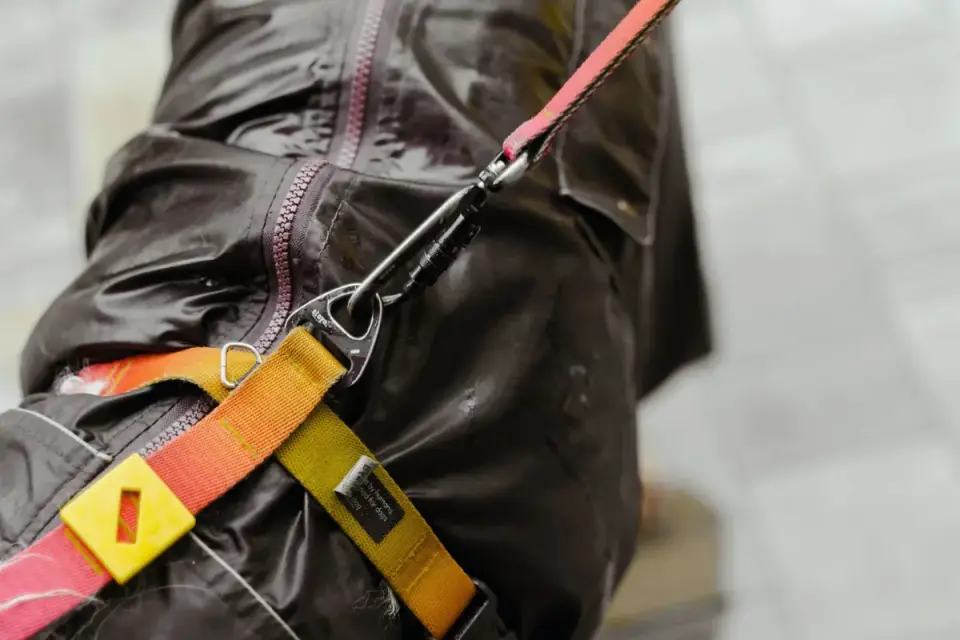
If the front seat is off the table, what does safe travel look like? The answer depends on your dog’s size and your car’s configuration, but the principle is the same: the back seat, with the dog restrained in a manner that the Center for Pet Safety or equivalent crash-testing body has validated. Crash-tested harnesses that attach to the back-seat seat belt system are the most popular option for dogs of most sizes. They allow the dog to sit, stand, and turn around—so the dog is not confined as it would be in a crate. The harness absorbs crash forces and keeps your dog from becoming a projectile. A crate, particularly one made from aluminum or heavy plastic and positioned on the back-seat floor, is another sound option. A crate can be more confining, but it also offers more rigid protection, and it can prevent the dog from sliding around during sharp turns or sudden stops. Some owners use a combination: a crate or barrier for longer highway trips and a harness for shorter neighborhood runs. The best system is the one you will use consistently. If a harness feels bulky but a crate feels too restrictive, you will skip the restraint. Match the tool to your habits and your dog’s temperament.
Practical Steps for Safe Front-Seat Avoidance
The decision is straightforward; the execution is what matters. Before your next trip, inspect your back seat. Make sure there is room for a restraint system—either a crate or a harness setup. If you have passengers who need to sit in the back, you may need to adjust how many people can travel with your dog, or you may need to reserve the back seat primarily for the dog. Test the restraint before you hit the road. If you use a harness, put it on your dog at home, attach it to a seat belt, and watch how your dog moves. Does the harness stay in place? Can your dog slip out? Is your dog comfortable enough to travel for the duration of your typical trips? Make these adjustments now so that by the time you are driving at highway speed, the system is proven. Check your car’s seat belt system. Not all seat belts are equally effective anchors for a harness. Some cars have cleaner attachment points than others. If you are unsure, consult the harness manufacturer’s instructions for your specific vehicle. Finally, never leave your dog unattended in a parked car while you run errands, and always bring water for longer trips. Safe restraint is the beginning, not the entirety, of safe travel.
The Real Outcome: What Owners Who Have Made This Shift Tell Me
I have seen owners shift their whole approach to car travel after one close call or after hearing about a friend’s injury. The change is not difficult once they commit to it. One couple I worked with, Emily and Michael, drove a sedan with a toy poodle named Oscar. They had always let Oscar sit in Emily’s lap during short drives. But after a parking lot accident—a minor fender bender, nothing serious, but the airbag deployed—they reorganized their car. They installed a crash-tested harness in the back seat and trained Oscar to jump into the back on command. Within three weeks, Oscar was riding in the back without hesitation. Emily told me later that the peace of mind was worth the small extra effort. She no longer had to divide her attention, and Oscar was genuinely safer. They still take the same trips, visit the same coffee shops, and travel to the same dog park. The only thing that changed was where Oscar sat. That is the lesson I come back to: the front seat feels convenient and familiar, but it solves no problem that the back seat cannot solve better.
Sources
- Dogster — Can Dogs Ride in the Front Seat? Vet-Reviewed Safety Considerations
- AAA — What You Need to Know About Dog Car Restraints
- SmartFinancial — Is It Illegal for Dogs To Sit in the Front Seat? Laws & Risks