On this page
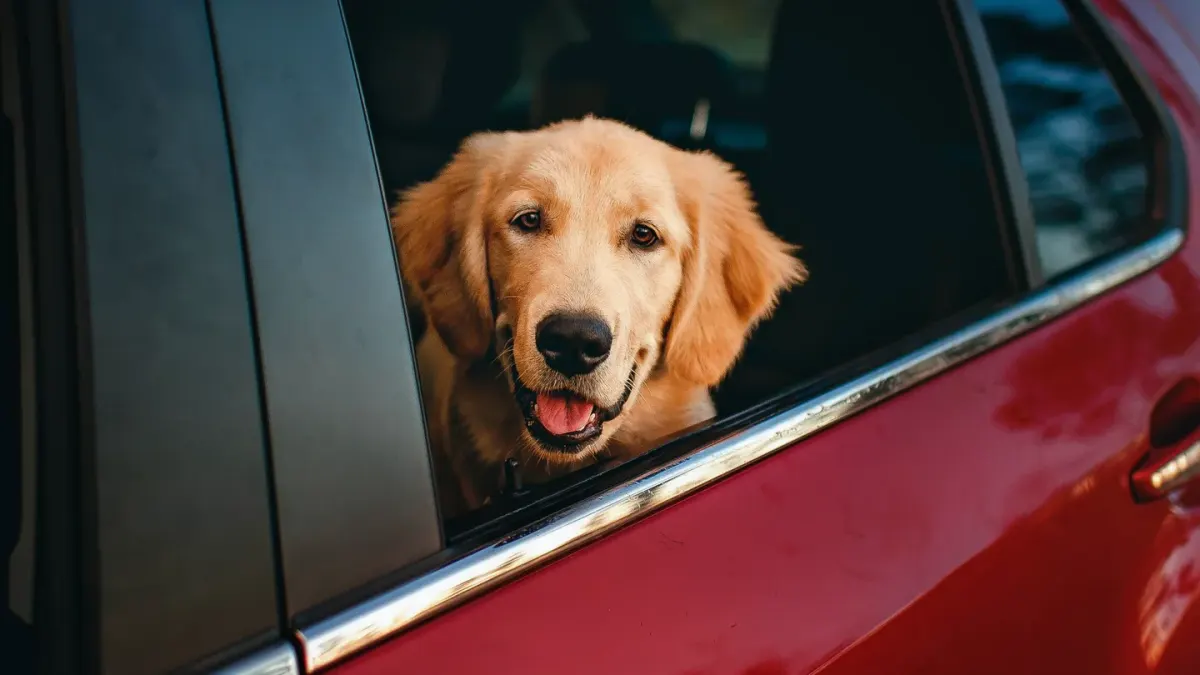
Rosie was a nine-month-old Cavalier King Charles Spaniel, twenty-two pounds, who’d been fine in the car as a puppy but started refusing to jump in by month eight. Her owner noticed it first on a Tuesday afternoon — Rosie hopped up onto the seat, then sat rigid, ears back, swallowing hard before they’d even left the driveway. By the time they hit the highway on-ramp, she was drooling in long ropes onto the seat, and ten minutes later she vomited. Her owner had been treating this as a training problem, working on “calm car” cues for weeks, before bringing it up at a routine visit.
The myth: motion sickness means vomiting
Most owners think motion sickness starts when the dog throws up. In my practice, that’s usually the last sign, not the first. According to VCA Animal Hospitals, dogs with motion sickness show excessive drooling, lip licking, yawning, quietness or restlessness, and sometimes vomiting — and the early nausea signs typically show up well before anything hits the upholstery. That gap matters, because it’s your actual window to intervene: pull over, crack a window, or end the trip before the dog is in genuine distress.
The reality is closer to a checklist you can watch for in the first five minutes of a drive:
- Repeated yawning that doesn’t match a tired dog’s body language
- Heavy lip licking or swallowing with no food around
- Drooling that starts suddenly and doesn’t stop
- Restlessness — pacing on the seat, whining, trying to change position
- Uncharacteristic stillness or apprehension, especially in a normally wiggly dog
- Abdominal heaving, which usually precedes vomiting by seconds to a couple of minutes
AKC notes this is especially common in puppies, likely tied to an inner ear balance apparatus that hasn’t fully matured — which tracks with what I see clinically. Many puppies do grow out of it by twelve months, but not all of them, and a dog that’s been fine for years can still develop new motion sensitivity from an ear infection or vestibular issue, so a sudden change in an adult dog is worth a vet visit rather than a shrug.
Before you go: the sequence I walk owners through
I keep this preventive and structured, because “just see how it goes” is how you end up cleaning a backseat on the interstate.
- Withhold a full meal for a few hours before travel, but don’t send your dog on an empty stomach either — a small snack an hour or two out is usually the sweet spot.
- Position matters more than owners expect. A dog who can see forward through the windshield, rather than sideways out a side window, often does better; the visual horizon helps the inner ear and eyes agree on what’s happening.
- Crack a window for airflow and cabin pressure equalization — a small thing, but it consistently helps in my experience.
- Build tolerance in short trips first. Five-minute drives to nowhere in particular, several times a week, can help a young or anxious dog recalibrate before you ask for a three-hour haul.
- Talk to your vet before a big trip if the pattern is established. For dogs with a documented history of motion sickness, maropitant (brand name Cerenia) is FDA-approved specifically for prevention of vomiting due to motion sickness in dogs four months and older, dosed roughly two hours before travel per the Cerenia label on DailyMed. It’s prescription-only, so this is a conversation with your vet, not a glovebox stash.
What I tell clients about the drooling-versus-anxiety question
This is the part I spend the most time on, because owners often ask whether their dog is sick or just scared, and the honest answer is that it’s frequently both, feeding each other. A dog that’s thrown up on three straight car rides starts anticipating the next one with genuine anxiety, and that anxiety on its own can trigger drooling and pacing before the car even moves — separate from the vestibular nausea that started the whole pattern.
I had a Labrador mix, Buster, around six years old, whose owner assumed he’d simply “always hated the car.” Buster would refuse to load, then drool and pant through the first fifteen minutes of any drive regardless of length, then settle. When we walked through the timeline, it turned out his motion sickness had started as a puppy and never been addressed — the anxiety layered on top over years of bad experiences. Rebuilding his tolerance with short, low-stakes drives and getting the true nausea component treated separately took about six weeks before his owner reported he’d load into the car willingly again. That’s one dog’s timeline, not a promise of how fast it goes for yours, but it’s a realistic shape for what improvement looks like.
The counterargument I hear a lot: “he’ll just get used to it if I keep taking him.” Sometimes that’s true for puppies whose inner ear is still maturing. It is not reliably true for an adult dog with an established sick-in-the-car pattern, where repeated bad experiences build anxiety on top of the physical nausea. I don’t recommend just powering through it in that group — you’re more likely to deepen the aversion than resolve it.
Before your first long trip of the season, it’s worth reviewing the basics in our Getting Started With Dog Travel: A Practical Prep Guide, especially if motion sickness is one of several things you’re trying to plan around.
The realistic bottom line
Watch the first five minutes of a drive, not the aftermath. Yawning, lip licking, sudden drooling, and restlessness are the signal; vomiting is just the endpoint you’re trying to avoid. If the pattern is new in an adult dog, or if a puppy hasn’t grown out of it by the time you’re planning real travel, loop in your vet — a short prevention plan tends to work better than repeated bad trips that build anxiety on top of nausea. Start your next trip with a short test drive, not a three-hour one.
Frequently asked questions
Can a dog outgrow motion sickness?
Many puppies do, likely as the inner ear's balance apparatus matures, but not all — some adult dogs continue to need management or medication for road trips.
Is drooling in the car always motion sickness?
Not necessarily. Anxiety alone can cause drooling and restlessness, and in dogs with a history of car sickness the two often reinforce each other.
Sources
- Motion Sickness in Dogs — VCA Animal Hospitals
- Carsickness in Dogs: Signs, Symptoms, Treatments — AKC
- Cerenia (Maropitant Citrate) Tablets — DailyMed