
On this page
Here’s the limitation that catches people off guard: a rabies tag on the collar is not proof of vaccination, and most front-desk staff will not accept it as one. They want a document — a certificate from your vet, or a printout from your clinic’s portal — with dates, lot numbers, and a signature. I’ve had clients show up with a dog current on every shot it needs, and still get turned away at drop-off because the paperwork was three years old or listed the wrong expiration.
In my practice, I tell clients to treat the vaccine record like a passport, not a formality. A Labrador mix named Biscuit, four years old, about 62 pounds, came in for his annual exam six days before a planned boarding stay over a family wedding. His owner assumed the record from last year’s visit would cover him — it wouldn’t, because the kennel required bordetella within six months, and his last dose was eight months old. We caught it because I asked what the trip looked like before I asked what shots he had. That’s the sequence I use with every boarding client now: what’s the stay, then what’s the paperwork, then what’s the vaccine gap. It saved him a rebooking fee and saved me a Friday-afternoon phone call from a kennel that wouldn’t budge.
Myth: one shot record covers every kennel
The myth is that “up to date on shots” means the same thing everywhere. It doesn’t. Rabies is the one vaccine nearly every facility requires without exception, because state and local law usually mandates it for dogs regardless of boarding — that part isn’t negotiable and isn’t really about the kennel’s preference. Everything past rabies is where facilities diverge, and this is the part owners underestimate.
According to the Recommendations for Core and Noncore Canine Vaccines, core vaccines — recommended for essentially every dog — cover distemper, adenovirus, parvovirus, leptospirosis, and rabies. Bordetella, canine influenza, and Lyme fall into the noncore category, meaning they’re recommended based on a dog’s lifestyle and exposure risk rather than for every dog automatically. Boarding is exactly the kind of exposure that pushes bordetella and canine influenza from optional to expected, because kennels concentrate dogs from many households in shared airspace.
8–12 weeks out: ask about more than rabies
Start the conversation with your vet two to three months before the trip, not two weeks. This is when it’s still easy to fit in a series rather than scramble for a single dose. Ask specifically about bordetella and canine influenza, and mention where you’re boarding — a facility in a region with a recent influenza outbreak may require it even if your dog has never needed it before.
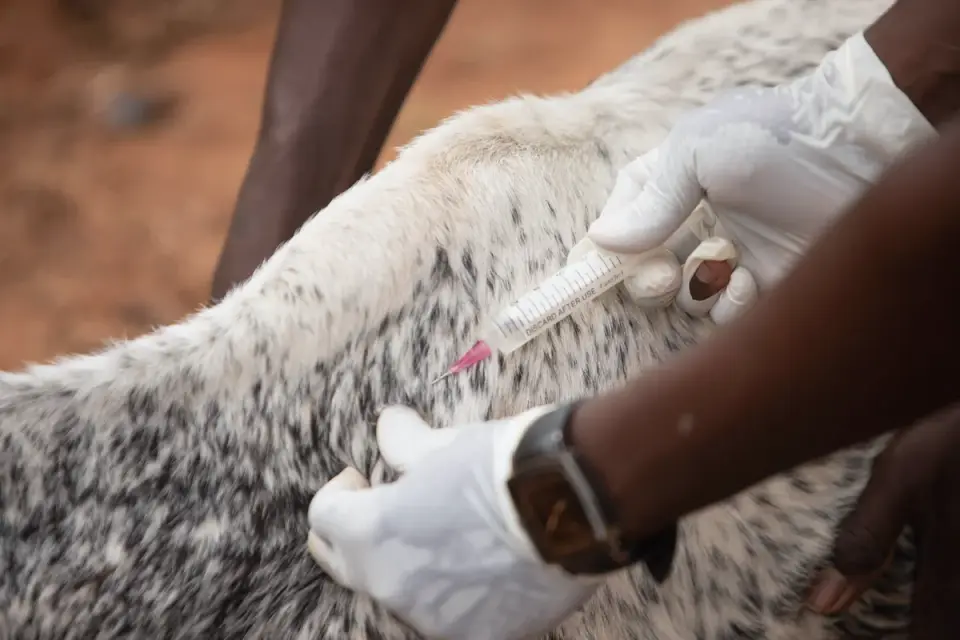
Per the 2022 AAHA Core and Noncore Vaccines for Dogs table, an initial canine influenza vaccination needs two doses spaced two to four weeks apart, with annual boosters after that. A dog who has never had it before needs that full runway. Bordetella is faster — a single intranasal or oral dose is typical for a first-timer, though the injectable form still calls for two doses spaced two to four weeks apart.
2–4 weeks out: close any gaps in a multi-dose series
If your dog needs the injectable bordetella or the initial canine influenza series, this is the window where the second dose has to land. Missing it doesn’t just delay protection — many kennels will restart the clock on what counts as “current” if the series wasn’t completed correctly, and you’ll be back at square one closer to your travel date.
This is also a reasonable time to double-check your dog’s general travel prep alongside the vaccine timeline, since crate training, ID tags, and medication refills tend to get scheduled on the same mental checklist as shots — and boarding trips have a way of exposing whichever one you forgot.
48–72 hours before check-in: confirm the actual paperwork
Call the kennel again, even if you called when you booked. Ask exactly which document they need: a signed certificate, a portal printout, or a fax from your vet’s office. Confirm the accepted format for bordetella — intranasal, oral, or injectable — since a few facilities still only take one type. Bring two copies. I’ve watched more boarding delays come from a lost fax than from an actual missing vaccine.
One short truth worth sitting with: no vaccine record substitutes for calling ahead.
Day of drop-off: what staff are actually checking
Front-desk staff are usually verifying three things — rabies is current and documented, bordetella is within the facility’s stated window (commonly six to twelve months, though some ask for the shorter end), and any facility-specific requirement like canine influenza is met. They are not typically re-verifying leptospirosis or Lyme status unless your dog has a known risk factor they’ve flagged before. If your paperwork is inconsistent with what their software expects, expect a delay, not necessarily a rejection — most facilities will let you fax or email a corrected record within the hour rather than sending your dog home.
During the stay: why the shot isn’t the whole story
Vaccination lowers risk; it doesn’t erase it. A vaccinated dog can still pick up kennel cough, because bordetella vaccines reduce severity and likelihood of infection rather than guaranteeing immunity, and a facility can only control what it can see and clean. I still tell clients to watch for a soft, persistent cough for a week or two after any boarding stay, and to call if it doesn’t resolve or if their dog seems genuinely unwell rather than mildly hoarse.
One of the harder conversations I have is with owners of older dogs or dogs with prior respiratory issues, where boarding risk has to be weighed against the trip itself — sometimes a pet sitter at home is the better call, and that’s a legitimate answer, not a failure to plan well enough.
My take
If I’m being direct about where I land: get your dog to core vaccines plus bordetella every time you board, and add canine influenza if the facility asks for it or if there’s been recent local circulation — don’t wait to be told twice. The strongest counterargument I hear is that annual boosters for a low-exposure dog feel excessive, and for a dog that never boards or socializes, that’s fair; noncore vaccines are supposed to track lifestyle, not apply to everyone identically. But once boarding is part of that lifestyle, the calculus changes, and I’d rather a client over-vaccinate against kennel cough than have their dog miss a wedding trip over a six-month-old certificate.
Book the vet visit as soon as you book the kennel. That single habit prevents almost every last-minute scramble I see.
Frequently asked questions
How far in advance should I schedule vaccines before a boarding trip?
Aim for 8–12 weeks out if your dog needs a multi-dose series like canine influenza, and at least 2–4 weeks out for bordetella if using the injectable form. Rabies just needs to be current per your local schedule.
Do all boarding kennels require the canine influenza vaccine?
No. It's a noncore vaccine recommended based on exposure risk, so requirements vary by facility and region — call ahead and ask directly.