On this page
Expect your dog to get cold before you do, even in a thick coat. That mismatch shapes almost every decision on a winter camping trip, from where you pitch the tent to how often you stop moving.
I counsel clients to think in heat balance terms first. Dogs produce heat through muscle activity and basal metabolism, then lose it through skin, breath, paws, and a relatively large surface-area-to-mass ratio in small breeds. Wet fur, wind, and lying still on cold ground accelerate that loss. The American Veterinary Medical Association notes that cold tolerance varies widely by age, coat, body condition, and health status, which is why two dogs on the same campsite can have very different nights.
A 4-year-old, 48-pound Border Collie mix came up in a pre-trip visit last fall. Fit, dense double coat, outdoor experience, owner planning a two-night trip with lows near 28°F. By day 2 on a prior trip, the owner reported restlessness at 3 a.m., curling tight with nose tucked, then reluctance to leave the sleeping bag liner at dawn. Appetite stayed strong, paws looked fine, but the dog shivered for about 10 minutes after a damp evening walk. We talked through what changed: longer stillness in the tent, damp undercoat that never fully dried, and no insulated barrier between dog and ground pad. The plan for the next trip centered on drying, insulation, and scheduled movement rather than adding more food alone.
Why do warm-blooded dogs get cold so fast outside?
Heat loss is physics before behavior. Conduction pulls warmth into frozen ground, convection strips it in wind, evaporation drains it from wet coat, and respiration loses moisture with every pant or sniff in dry air. Puppies, seniors, lean sighthounds, small breeds, and dogs with hypothyroidism, arthritis, or very short coats have less reserve.
That baseline matters because shivering, curling, lifting paws, seeking shelter, whining, or slowing down are compensatory responses, not complaints. Shivering generates heat through muscle contraction and may help support normal thermoregulation for a short period, but sustained shivering means demand is outpacing supply. VCA Hospitals describes progressive hypothermia in dogs as lethargy, weakness, and altered mentation as core temperature falls, which is why early interruption beats late rescue.
Cold also changes paws and skin. Ice, packed snow, de-icers, and rough frozen ground can dry pads and cause cracking or chemical irritation. Wet paws then refreeze. Nose and ear tips have less insulation. Caloric need often rises because activity plus thermogenesis burns more fuel, though the increase depends on temperature, wind, and workload.
Myth versus reality: what winter camping with a dog is really like?
Myth: a thick coat means no jacket, no pad, no plan. Reality: coat helps, but stillness, dampness, and wind undo much of that advantage overnight.
Myth: dogs will tell you clearly when they are too cold. Reality: many dogs push through during play, then crash when activity stops. The quiet period in the tent tells you more than the joyful sprint on the trail.
Myth: more food fixes cold nights. Reality: adequate calories help maintain energy balance, yet food cannot compensate for a wet dog sleeping directly on cold earth in wind.
Wind deserves special respect. The National Weather Service wind chill chart shows how quickly moving air lowers effective temperature on exposed skin, and the same principle applies to thinly furred ears, belly, and paws.
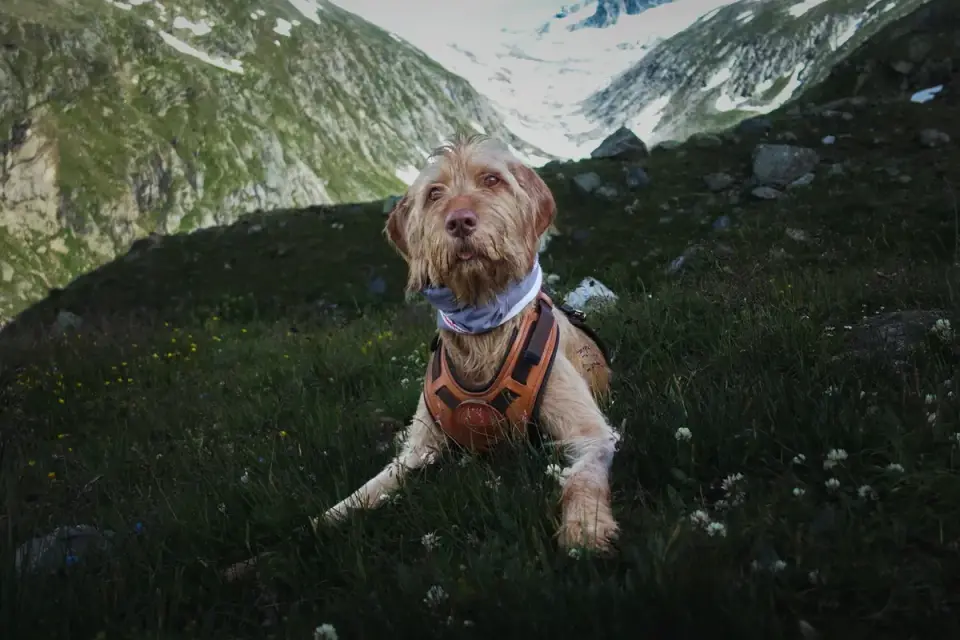
Expect stillness to be the hardest part.
What does cold stress actually look like in camp?
Watch across three windows: on trail, in camp, and overnight.
On trail: lagging behind, lifting paws, sitting down on cold ground, burrowing into your legs, or a tucked tail that was up an hour ago.
In camp: reluctance to settle, rotating sleeping spots, pressing against you or the tent wall, mild shivering that stops with movement or a dry layer.
Overnight and early morning: tight curl with nose covered, restlessness from 2 to 5 a.m., stiffness on rising, reduced interest in water or breakfast. Persistent shivering, lethargy, pale gums, or clumsiness warrant warming and veterinary advice.
How should you sequence a cold-weather camp day with a dog?
Think dry, insulated, fed, and moving — in that order.
Afternoon arrival: set the thermal base first
Pitch out of wind, preferably with a natural windbreak. Lay a closed-cell foam pad or insulated dog pad before anything else, then a dry blanket or sleeping bag on top. Change out of wet layers yourself so you model the rule: nothing damp stays in the sleep system.
Brush out snow clumps, towel the belly, paws, and chest, and check between toes for ice balls. Offer lukewarm water, not hot, since many dogs drink less in cold and mild dehydration makes everything harder. If you want a full gear checklist, see What to Pack for a Camping Trip With Your Dog.
Evening: eat, move briefly, then settle
Feed the regular dinner on schedule, with a small additional snack only if activity was high and body condition supports it. For context on travel feeding routines, see Feeding Your Dog on a Road Trip: What to Know.
Take a short, leashed movement loop before bed to allow elimination and generate warmth, then towel again. Jacket on for thin-coated, small, senior, or wet dogs. Cinch the tent, place the dog pad away from the door, and keep a dry fleece within reach for the 3 a.m. tuck-in.
A failed approach I see often involves relying on body heat alone. A 7-year-old, 62-pound Labrador from a late-November trip is a good example. The owner skipped the dog pad to save space, figured shared sleeping bags would be enough, and left a damp neoprene vest on overnight “for warmth.” By 4 a.m. on night one, the dog was panting then shivering in cycles, shifted every 20 minutes, and finally stood by the tent door. Inside, condensation had soaked the vest and the human bag edge. The tradeoff seemed logical — less gear, more cuddling — yet conduction to the ground plus trapped moisture overwhelmed shared warmth. The fix was unglamorous: dry dog, dry fleece, foam pad underneath, vest off. Sleep improved the second night without adding calories or mileage.
Morning: warm up before you pack up
Cold mornings punish rushed routines. Offer water first, then a brief play or walk to generate heat before standing around breaking camp. Re-check paws for cracks, redness, or limping. Dry any dew or frost from the coat. Dogs that camped comfortably often still stiffen after stillness, especially seniors, so keep the first half-mile easy.
Hydration still counts when bowls threaten to ice over. Insulated bowls, frequent refills, and melting snow only as a backup help. For long-drive hydration habits that transfer well to camp, see How to Keep Your Dog Hydrated on a Long Drive.
What is my recommendation, and what is the strongest counterargument?
My position: insulate from below and stay dry above, and treat movement as medicine in small doses. A dry dog on an insulated pad in a wind-sheltered tent tolerates far more cold than a damp dog with extra food and a fashionable jacket but no ground barrier. That sequence — dry, insulated, fed, briefly moved — prevents most miserable nights I hear about in clinic.
The strongest counterargument is that some hardy breeds genuinely prefer cold and resist jackets, pads, and tents. True for many huskies, malamutes, and working farm collies in their element. Even then, age, wind, wet snow, altitude, and injury change the equation. I still bring the pad and dry layer. You can always leave them unused.
An edge case that changes application involves nighttime urinary needs and joint stiffness. A 9-year-old, 34-pound Australian Shepherd mix illustrated this three weeks into a shoulder-season travel stretch. She camped well at 35°F on an insulated pad, ate normally, and showed no shivering. The surprise came at 5 a.m.: reluctance to step onto frosty grass, two false starts out the tent door, then a rushed, painful-looking squat followed by limping for the first 40 yards. No paw cut, just cold-aggravated stiffness and aversion to the surface. The owner had judged comfort by overnight stillness and missed the morning transition. From then on, they placed a small tarp runner outside the door, slipped on booties for the first potty walk only, and allowed five minutes of slow leash walking before packing. Daytime energy looked the same, but mornings stopped deteriorating.
Are booties and jackets always necessary?
Not always. Fit depends on coat, temperature, wind, surface, and duration of stillness. Use them as tools for specific problems — ice balls, de-icer exposure, prolonged inactivity — rather than all-day defaults.
Frequently asked questions
How cold is too cold to camp with a dog?
There is no single cutoff. Coat, size, age, health, wind, dampness, and whether the dog is moving or sleeping matter more than air temperature alone. Plan for the overnight low plus wind, and have a bailout option.
Does my dog need a jacket or booties?
Many short-coated, small, senior, or lean dogs benefit from an insulated layer during stillness, and booties can help with ice balls, rough frozen ground, or de-icers. Fit and dryness matter more than brand.
Should I feed more on a winter camping trip?
Some very active dogs need extra calories in cold, but keep the base diet consistent and adjust portions cautiously based on body condition, activity, and your veterinarian's guidance.
Sources
- Cold-Weather Animal Safety — American Veterinary Medical Association
- Wind Chill Chart — National Weather Service