On this page
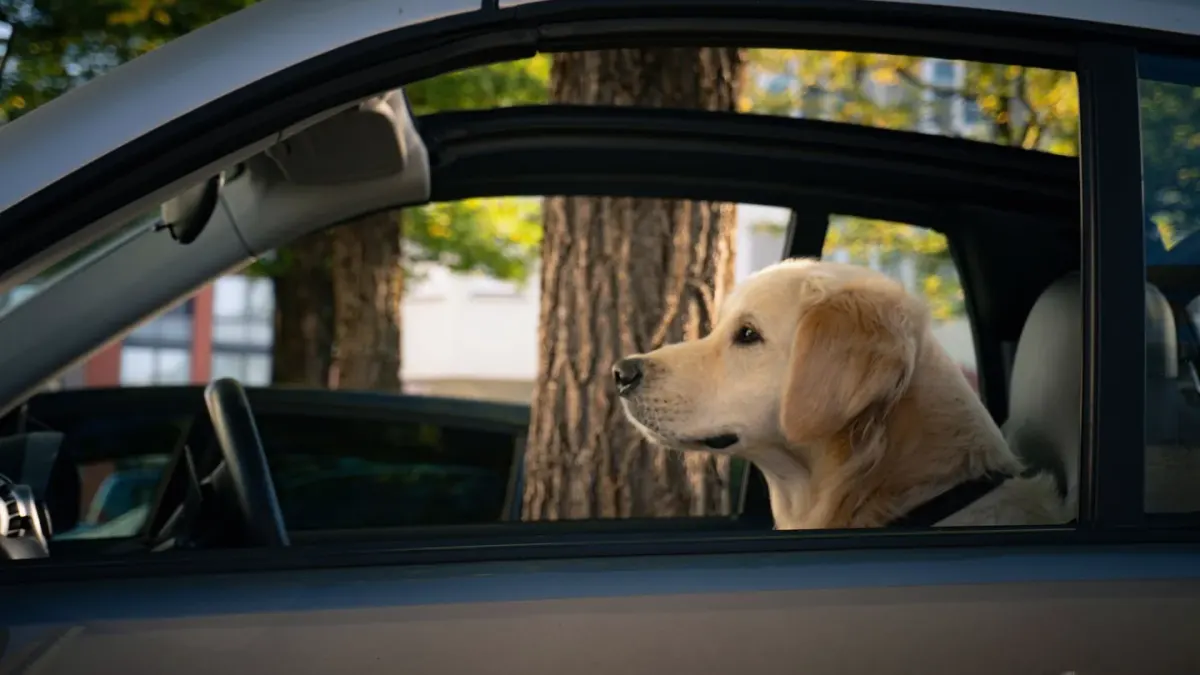
Bodhi was a nine-month-old Cattle Dog mix whose owners brought him in because he’d started refusing to jump into the hatchback, something he’d done without hesitation as a puppy. He’d drool within the first two minutes of driving, then vomit by the time they hit the highway on-ramp. The owners assumed he was “being difficult” about a recent move to a new house. What I actually saw on exam was a healthy, food-motivated dog who tensed the second his paws touched the cargo mat — a learned association, not defiance, built on top of a few genuinely miserable early rides.
That’s the pattern I see most: an owner describing behavior — pacing, whining, refusing to load up — and assuming it’s a personality trait, when it’s almost always one of two physiological stories layered together.
Myth: he’s just stubborn about the car
The stubbornness read is understandable, because the behavior looks willful — digging in at the door, bracing all four paws. But dogs don’t usually resist things that feel neutral to them. When a dog balks at the car specifically, something about that experience registered as unpleasant, and the brain is doing exactly what it’s supposed to do: avoid the thing that made it sick or scared last time.
Reality: it’s usually motion sickness, fear, or both
The physical cause is the more common starting point in young dogs. Car sickness comes from a mismatch between what the inner ear senses and what the eyes see — the Merck Veterinary Manual describes this as motion sickness driven by the vestibular system, the balance structure in the inner ear, misreading vehicle movement. Puppies are disproportionately affected because that system isn’t fully mature yet, and many genuinely grow out of the nausea as they age — though not always out of the fear that got built on top of it.
Fear is the second, separate track, and it can exist with or without nausea. VCA Animal Hospitals notes that dogs who felt sick or frightened on early car rides can develop anxiety that persists long after any physical sickness resolves — the dog starts anticipating the bad feeling before the car even moves. That’s the anxious-anticipation pattern: drooling and pacing in the driveway, before the engine turns over.
In my practice, the dogs who struggle most as adults are almost always the ones whose first several rides were rough — a shelter transport, a single trip straight to the vet for something scary, or repeated bouts of vomiting before anyone identified it as motion sickness. One patient, a Beagle named Daisy, had exactly one memory of the car: being driven to be spayed at four months old, groggy and unwell for the ride home. By the time I met her at age three, she’d generalized that dread to any car, any destination, even short trips to the dog park she loved once she arrived. Her owners had tried treats at the door, which she refused entirely — the fear was too loud for food to compete. We had to back the whole plan up to the driveway, sometimes just sitting in a parked car with the engine off, before she could tolerate movement again. It took roughly six weeks of short, low-stakes sessions before she’d load up on her own.
A practical sequence, not a single fix
Sorting out which pattern you’re dealing with changes what actually helps, so this is the order I walk owners through.
Rule out the physical piece first. If your dog drools, licks their lips repeatedly, or vomits early in a ride, treat it as motion sickness until proven otherwise, and have your vet check for other causes like an ear infection before assuming it’s purely behavioral.
Then rebuild the association from zero, not from the highway. The American Kennel Club recommends starting with the car parked and the engine off, pairing the space with something the dog genuinely loves, and only adding motion once your dog is relaxed at each prior stage. Rushing this step is the single most common mistake I see — owners jump straight to a real trip because they’re in a hurry, and the dog never gets a chance to build a new, calmer memory to replace the old one.
Keep sessions short and end on a calm note. Five short, boring, successful trips beat one long, stressful one. A five-minute loop around the block that ends with the dog stepping out relaxed does more for the long-term pattern than a 45-minute drive that ends in vomiting.
Manage the physical environment. Crack a window for airflow, keep the crate or seat secure so the dog isn’t sliding on turns, and skip a big meal right before departure — a lighter stomach handles motion better.
If you’re mapping out a longer trip once the car itself feels manageable again, our Getting Started With Dog Travel guide walks through the broader prep sequence, from documentation to packing.
Where I land, and the trade-off I won’t pretend away
My honest recommendation is to treat car anxiety as a training project measured in weeks, not a single afternoon fix — and to loop in your vet early if nausea is part of the picture, since untreated sickness will undercut any behavioral work you do. The counterargument I hear most is that anti-nausea or anti-anxiety medication is faster, and for a dog with a big trip coming up soon, that’s a fair, evidence-based option to discuss with your vet rather than a shortcut to be ashamed of. But medication alone, without the desensitization work, tends to leave the underlying association intact — you’ve muted the reaction, not changed how the dog feels about the car. I still start with the slow, boring, structural approach for dogs who have time on their side, and reserve medication for dogs who don’t, or for the messier cases where fear is severe enough that no amount of treats gets a paw near the door.
I think about Daisy’s owners sometimes, because six weeks felt long to them at the start. But watching her hop into the back seat on her own, tail up, by the end of it, was a very different dog than the one who used to be carried out to the car limp with dread. That’s the outcome the slow version buys you: not just tolerance, but an actual change in how the ride feels to her.
Frequently asked questions
Do puppies outgrow car sickness?
Many do, as the vestibular system in the inner ear finishes maturing over the first several months of life, though some dogs also develop a learned fear of the car that outlasts the physical nausea.
How long does it take to fix car anxiety in a dog?
It varies widely, but a gradual desensitization plan — starting with a parked, engine-off car — commonly takes several weeks of short, consistent sessions rather than a single outing.
Should I give my dog medication before car anxiety training?
That's a conversation for your veterinarian, especially for dogs with a trip coming up soon or severe fear; medication can help in the short term, but it works best alongside, not instead of, retraining the association with the car.
Sources
- Motion Sickness in Dogs — Merck Veterinary Manual
- Motion Sickness in Dogs — VCA Animal Hospitals
- Teach Your Dog to Ride in the Car: Preventing Anxiety and Motion Sickness — American Kennel Club