On this page
The Comfort Myth That Undoes Most Coach Trips
Most owners prepare for a long coach journey by packing the wrong thing first: comfort. A padded bed, a favorite blanket, a bag of treats for the road. Comfort matters, but it is not what determines whether a dog handles ten or fourteen hours on a moving coach well. What determines that is whether the dog has practiced the specific sequence of confinement, motion, and unpredictable stops that a coach trip actually involves — and most dogs haven’t, because most owners never rehearse it.
I met this gap firsthand with a client’s dog before a long-haul coach trip down the coast. Rex, a 6-year-old Labrador mix weighing 68 pounds, had never spent more than 20 minutes in a vehicle. His owner assumed a comfortable crate and a full breakfast would be enough for a 14-hour overnight run. By the second hour, Rex was drooling heavily and refusing to settle — classic early motion sickness, not fear. We hadn’t built in a trial run, and it showed almost immediately.
Myth vs. Reality: What Actually Steadies a Traveling Dog
The myth is that a dog either “does well” or “doesn’t do well” with travel, as if it’s fixed. The reality is closer to a trainable tolerance that builds with short, deliberate exposures. CDC guidance on pet travel safety emphasizes frequent stops for relief, water, and stretching, plus packing enough food, water, and documentation for the full trip — none of which fixes a dog who has never practiced sitting still in motion.
The second myth is that withholding food entirely prevents sickness. It doesn’t, and it can backfire. VCA Animal Hospitals notes that motion sickness in dogs is driven by the inner ear’s balance system, not an empty or full stomach on its own — though a large meal shortly before departure does make vomiting more likely. The practical middle ground, per Preventive Vet, is a light meal three to four hours before boarding rather than a full skip.
A third myth is that sedation is the fallback for an anxious traveler. It isn’t a shortcut. Sedatives can blunt a dog’s ability to balance and regulate temperature, which is a real concern on a coach where you can’t monitor them constantly. Anti-nausea medication is a different category and, per veterinary guidance, should be trialed at home first — never introduced for the first time on travel day.
The Two-Week Run-Up: A Practical Sequence
This is the part clients skip, and it’s the part that actually changes outcomes. Two weeks out, start short sessions of confinement in the crate or carrier the dog will use on the coach — five minutes, then fifteen, then an hour, rewarding calm settling rather than excitement. One week out, take a short car ride timed to mimic a coach stop interval, roughly two to three hours, so you can watch for drooling, lip-licking, or restlessness before it’s a real problem.
Pack a “structure kit” rather than a comfort kit: the dog’s regular food (a coach trip is the wrong time to switch diets), a collapsible water bowl, waste bags, a leash that clips securely, and current ID. Confirming your dog’s ID tags and travel records are current is a five-minute task that matters far more on a multi-stop coach route than most owners expect, since a dog that slips a leash at a rest stop in an unfamiliar town is a genuinely different problem than one that slips a leash at home.
Three days before departure, do a final light meal test at the same time you’ll feed on travel day. This alone catches most last-minute surprises.
On Board: What Changes Once the Wheels Are Turning
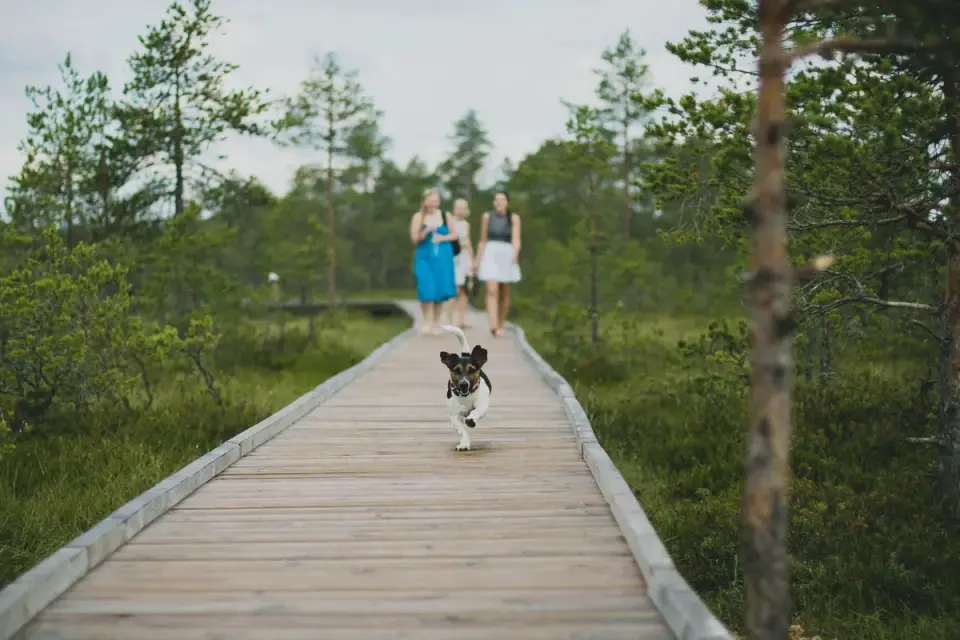
Once you’re moving, the plan simplifies to three habits: offer water in small amounts at every stop rather than a full bowl mid-ride, keep the crate or carrier secured and away from direct sun through a window, and resist the urge to let the dog roam the aisle even briefly. A collapsible bowl and frequent small offerings beat one large bowl that sloshes and gets ignored.
Boredom is its own problem on a long coach ride, separate from motion sickness, and it’s worth planning for on its own terms. A frozen food puzzle or a long-lasting chew gives a dog something to do with the first restless hour, and structured entertainment for long stretches genuinely reduces the whining and pacing that owners mistake for distress.
Three weeks after that first rough trip, Rex’s owner called with an update that surprised her. On a shorter follow-up coach ride, she’d fed him four hours ahead, run him through two fifteen-minute crate sessions at home that week, and packed a frozen chew for the first hour. He settled within 20 minutes and slept most of the ride. Nothing about Rex’s temperament had changed. What changed was the sequence leading up to it, which is the entire argument for rehearsing rather than just packing.
The Trade-Off I Won’t Pretend Away
Here’s the honest counterargument: none of this guarantees a smooth trip, and a dog with a genuine anxiety disorder — not simple motion sickness — may need a veterinary behavior consult before any coach journey is realistic at all. AAHA recommends a pre-travel veterinary visit specifically for dogs with existing health concerns or a history of travel distress, and that visit can surface issues a two-week home routine simply can’t address.
I still land on rehearsal over gear every time. Comfort items help at the margins, but they don’t teach a dog’s nervous system what fourteen hours of engine noise and stop-start motion feels like. Rehearsal does. An edge case worth naming: an older dog with arthritis handles the confinement piece differently than a young, healthy one. By day 3 of a multi-leg coach itinerary, a senior dog’s stiffness from prolonged crate time can outweigh any motion-sickness gains from the same routine, so the run-up schedule needs to shrink the confinement windows and add standing breaks, not just repeat the young-dog plan at a slower pace.
Where I Land
A long coach journey is manageable for most healthy dogs, but only if the two weeks before departure do real work — short confinement sessions, a timed meal test, and a rehearsed water-and-relief rhythm — rather than just a bag of new toys. That’s the trade I’d make every time, even knowing it takes more effort upfront than packing a comfort kit and hoping for the best.
Frequently asked questions
How long before a coach trip should I stop feeding my dog?
Aim for a light meal three to four hours before departure rather than a full skip — an empty stomach doesn't reliably prevent motion sickness and can make some dogs more prone to nausea from stomach acid.
Is it safe to sedate a dog for a long coach journey?
General sedation isn't the default recommendation because it can affect balance and temperature regulation. If your dog struggles with travel, ask your vet about anti-nausea options and trial them at home first, well before travel day.
How often should a dog get water and a break on a long coach ride?
Offer small amounts of water at every scheduled stop rather than one large bowl mid-ride, and use each stop for a short walk and relief break.
Sources
- Pet Travel Safety — CDC
- Motion Sickness in Dogs — VCA Animal Hospitals
- Preventing & Treating Motion Sickness in Dogs — Preventive Vet
- The Ultimate Guide to Traveling Safely with Your Pet — AAHA