On this page
- The myth: more dogs just means more of everything
- Restraint comes first — and it’s not optional with two dogs
- Before you book the route: the sequence I walk clients through
- What actually happens in the cabin — the behavior piece
- Breaks, water, and the heat rule that doesn’t bend for two dogs
- Related reading before you go
- Where I land, and the trade-off I won’t pretend away
The math people do before a two-dog road trip is almost always wrong. They double the food, double the leashes, double the water bowls — and then act surprised when the actual hard part turns out to be logistics, not supplies: where each dog rides, how they’re restrained, and what happens when one gets carsick and the other doesn’t.
I’ve counseled a lot of clients through this exact planning call. In my practice, one memorable pair was a 9-year-old Labrador and a 2-year-old Border Collie mix belonging to the same family, headed on a 14-hour drive from Ohio to a Gulf Coast rental. The Lab had mild hip stiffness and did fine crated flat in the back of an SUV; the Border Collie mix, who’d never ridden more than 20 minutes at a stretch, started drooling and pacing at hour two. The owners had planned one long driving day with two short stops. We rebuilt it around three shorter legs, a pre-trip trial run around the block, and separate crates instead of a shared back seat — because the young dog’s anxiety was feeding off the older dog’s stillness, and vice versa. That’s the part owners rarely anticipate: two dogs in one cabin don’t average their stress levels, they trade them.
The myth: more dogs just means more of everything
The common assumption is that a two-dog road trip is a scaled-up version of a one-dog trip — same rules, extra portions. The reality is that adding a second dog changes the physics and the behavior of the trip. Two loose dogs in a back seat can pile onto each other during braking, block the driver’s sightline, or set off a resource-guarding spat over a single water bowl at a rest stop. According to the American Veterinary Medical Association, the safest place for any dog is the back seat, properly restrained in a crate, carrier, or crash-tested harness — and that guidance doesn’t change with a second dog, it just has to be executed twice, independently.
Restraint comes first — and it’s not optional with two dogs
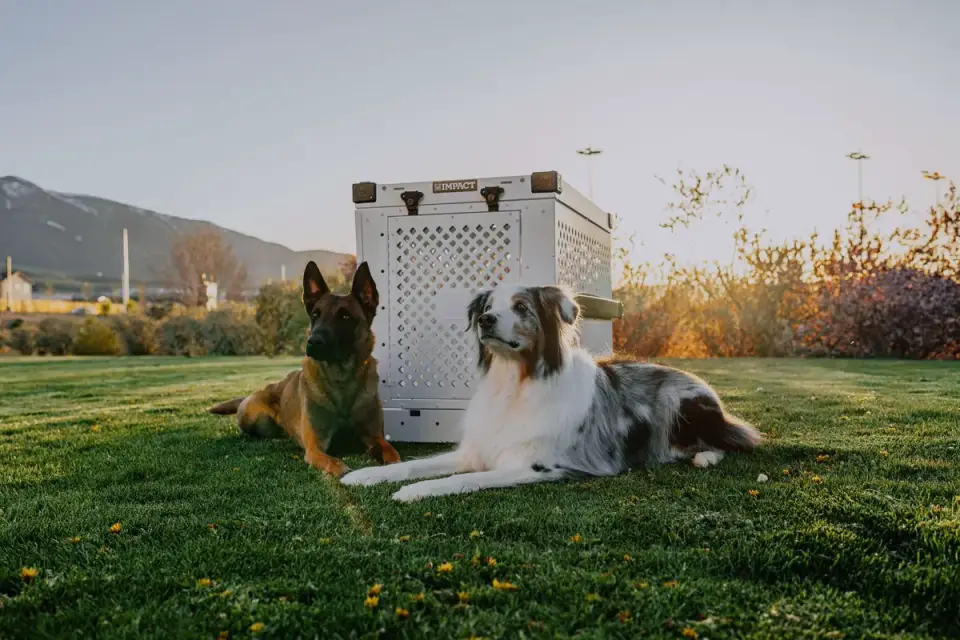
Give each dog their own restraint system. Sharing one harness tether or letting two dogs ride loose together is the single most common mistake I see, because it turns a minor stop into a tangle of leashes and startled animals. The Center for Pet Safety has independently crash-tested crates and carriers, and its testing found real performance gaps: some widely sold crates and carriers failed outright under crash conditions, while others — hard-sided crates anchored with tie-down straps, in particular — held up. There’s no US regulatory crash-test standard for pet restraints the way there is for child car seats, so “crash-tested” claims are worth checking against CPS’s own published results rather than marketing copy.
For two dogs, that usually means two secured crates (side by side if your cargo area allows it, stacked only if both are rated for it) or two independently anchored harnesses clipped to separate seatbelt latch points — never both dogs clipped to the same anchor.
Before you book the route: the sequence I walk clients through
- Pick the shorter-tolerance dog’s limit, not the average. If one dog handles four hours comfortably and the other gets restless at ninety minutes, plan legs around the ninety-minute dog. Averaging the two just means both dogs end up frustrated.
- Do a trial run first. A 20–30 minute drive a week out tells you more than any packing list — you’ll see who paces, who drools, who settles.
- Feed light and early. Veterinary guidance from PetMD notes that motion sickness is more common in younger dogs and is driven by inner-ear signaling from unpredictable movement — a light meal several hours before departure, not right before, tends to help settle stomachs.
- Assign seats, don’t improvise them. Decide who rides behind the driver and who rides behind the passenger before you leave the driveway, and keep that assignment consistent leg to leg. Dogs settle faster into a spot that stays theirs.
- Stagger the rest-stop routine. Walk and water one dog at a time on separate leashes rather than juggling both off-leash near a parking lot — it’s the highest-risk moment of the whole trip.
What actually happens in the cabin — the behavior piece
This is the part that surprises first-timers most: two dogs traveling together often regulate off each other, for better or worse. A calm, experienced traveler can help settle an anxious one — but an anxious dog can also wind up a calm one, especially on a long single-day drive with too few breaks. I’ve watched this play out with two dogs from the same household who were fine individually and fed each other’s stress within the first hour of a long haul, escalating from panting to bark-whining to one dog trying to climb into the other’s crate space. We didn’t solve it with medication — we solved it by shortening the driving legs, giving each dog visual separation with a low crate cover on the anxious one’s side, and building in a real walk (not just a bathroom break) every two hours. By the second driving day, both dogs had settled into the new rhythm.
Keep the window-riding instinct in check for both dogs: the AVMA also flags that a head hanging out the window exposes eyes, ears, and nose to airborne debris, and that risk doesn’t go down with a second dog in the car — if anything, one dog’s excitement can egg the other one into the same habit.
Breaks, water, and the heat rule that doesn’t bend for two dogs
Frequent breaks matter more with two dogs, not less, because you’re managing two bladders, two stress levels, and potentially two different eating schedules on the road. Never leave either dog in a parked car alone, even for a “quick” bathroom stop inside a gas station — cabin temperatures on an 80°F day can reach roughly 114°F within thirty minutes, per AVMA guidance. If you’re traveling solo with two dogs, that means planning stops where you can walk both, or leaving one secured in a shaded, running vehicle with someone present — never both dogs unattended.
Related reading before you go
If you’re flying any leg of the trip instead of driving the whole way, check airline pet policies well before booking, and look into airport pet relief areas if a connection is involved. For beach stops along the route, our guide to beach trips with your dog covers etiquette and hazards worth knowing. If you’re debating whether either dog should stay home with a sitter instead, our boarding kennel vs. pet sitter comparison can help with that call.
Where I land, and the trade-off I won’t pretend away
My honest recommendation: plan a two-dog road trip around your more anxious or lower-tolerance traveler, not the average of the two, and give each dog independent restraint and independent attention at every stop. The counterargument I hear most is that this makes trips slower and more expensive — more driving days, more stops, sometimes a bigger vehicle for two full crates. That’s true, and I won’t dismiss it. But the alternative — one long day, shared restraint, improvised seating — is where I’ve seen trips go sideways: a startled dog jumping between seats during braking, a resource squabble at a rest stop, or a young dog’s anxiety spiraling because it fed off an older dog’s stress with no break in the cycle. A slower trip with two dogs riding calm and secured beats a faster one where you’re managing a crisis in the back seat at mile 400.
Frequently asked questions
Should two dogs share one crate on a road trip?
Generally no. Independent crates or restraints let each dog move, settle, and be secured without one dog's motion or stress affecting the other, and it avoids space or resource conflicts during long drives.
How often should you stop when road-tripping with two dogs?
Plan stops around your more restless traveler — often every two hours rather than every four — and walk and water each dog separately rather than managing both at once near traffic.
Can one dog's car anxiety affect the other dog?
Yes. Dogs often pick up on a travel companion's stress signals, which can escalate panting, pacing, or vocalizing in both animals. Shorter driving legs and visual separation between crates can help.
Sources
- Traveling with your dog or cat — American Veterinary Medical Association
- Pet Carrier & Crate Crash Test Research — Center for Pet Safety
- Dog Motion Sickness: What It Is and How To Help Your Dog — PetMD