On this page
Eleven years of mileage shows up after three hours folded on a back seat, and that first slow rise tells you everything about what your senior needs next.
I counsel clients to expect stiffness on travel days even in well-managed older dogs. The car ride itself is the problem, not a lack of flexibility. Long, still positioning may leave joints and soft tissues feeling achy, and asking for big range-of-motion work right off the loading ramp can backfire.
A 12-year-old, 68-pound Lab mix made that decision concrete for me last travel season. His owner planned a 7-hour interstate day with two quick gas-station outs. At the first stop he stood with his head low, shifted weight off his left hip, and needed about 25 slow shuffling steps before his hind feet stopped scuffing. We scrapped the ambitious stretching list she had printed and rebuilt the stop around sniff-walking and weight shifting. By the second out he rose in half the time and chose to explore on his own.
Your rest-stop checklist for a stiff senior
- Park for footing first: grass, packed dirt, or rubber matting over slick concrete
- Leash, non-slip harness, water and bowl, and a familiar mat within reach
- Let the dog eliminate and sniff for 2-3 minutes before you touch legs or spine
- Walk 3-5 minutes at the dog’s pace before any held position
- Keep stretches supported, symmetrical, and pain-free; stop if the dog sits, pulls away, or pants sharply
- Offer water, check paws and nails, then reload with bedding that supports elbows and hips
Use that list as your gate. If footing is icy, the lot is loud, or your dog will not walk comfortably yet, you are not ready for stretches.
The limitation no stretch routine can fix
Stretches do not reverse hours of immobility. What they may help support, when muscles are warm, is circulation to working tissues, comfortable range of motion for the next leg of travel, and a calmer transition back into the car. That expectation matters because owners often press harder when a dog still looks stiff, which is exactly when less is more.
The American Kennel Club notes that stiffness after rest, reluctance to climb, and slowing on walks are common signs of age-related joint change, and travel magnifies all three. I frame rest stops as preventive care: baseline comfort, low-stress handling, and realistic timelines over heroics.
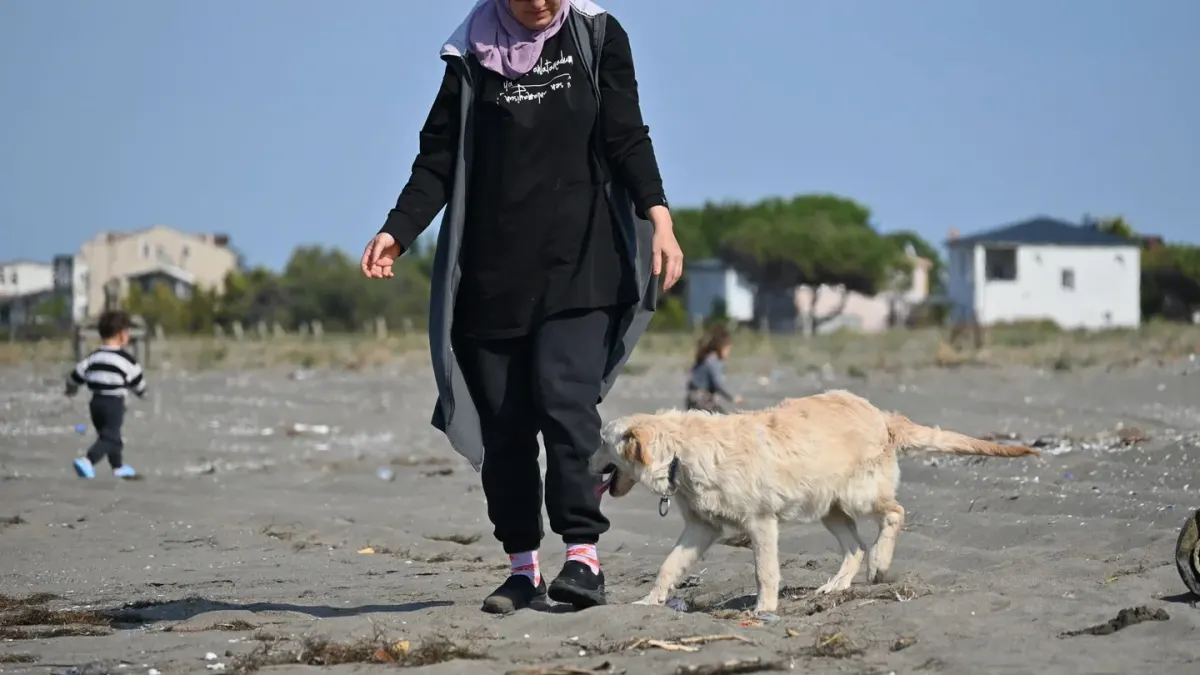
Walking is the warm-up.
The stretch myth that gets seniors hurt
The myth is that an older dog needs deeper, longer holds to loosen up, especially at a scenic overlook. The reality is that senior soft tissue responds better to brief, active movement than to sustained pulling. Cold muscles, fatigued stabilizers, and an unfamiliar slope are a poor combination for cookie-stretches held to the max or for lifting paws high behind the body.
VCA Hospitals describes how osteoarthritis may affect mobility and comfort during everyday activity, which is why I keep rest-stop work within normal standing and walking postures. We are supporting function for travel, not rehabilitating an injury on gravel.
A low, long 9-year-old herding mix showed me the tradeoff clearly. His owner had watched videos and tried to ease his hips by gently drawing each hind leg back while he stood at the tailgate. After about 60 yards of decent walking he froze, tucked his pelvis, and sat hard when she reached for the second leg. She meant well, but the held pull asked for more hip extension than his tired muscles could stabilize. We replaced it with slow figure-eights and a chest-high cookie turn that kept all four feet planted. He walked back to the car loose and willing.
A 10-minute sequence that works on asphalt
Plan on stopping about as often as you would for any senior traveler, then give each stop a predictable rhythm. For timing ideas, see How Often Should You Stop on a Road Trip With a Dog? and pair movement with water using How to Keep Your Dog Hydrated on a Long Drive.
1. Unload, sniff, and settle
Park away from traffic, help large or painful dogs down with a ramp or firm assist, and stand quietly while your dog eliminates. Let the nose lead for a few minutes. Sniffing lowers arousal and lets gait normalize so you can see the true baseline.
2. Walk before you stretch
Walk 3-5 minutes on level ground at the dog’s chosen speed. Add two or three wide curves or figure-eights to encourage gentle weight shifting through shoulders and hips. This active portion may help support circulation and joint comfort better than static holds alone.
Cornell University College of Veterinary Medicine emphasizes low-impact, regular activity for aging dogs, and that principle travels well. Short, frequent movement beats one long rest-stop workout.
If you are mapping a long day, How to Plan a Cross-Country Road Trip With Your Dog can help you space these walk-first stops so stiffness never builds for hours.
3. Three supported moves, all four feet mostly down
Do each move for 5-10 seconds per side, one to two rounds, with treats at nose height. Stop any rep that causes a limp, head turn, lip lick, or sit.
Nose-to-shoulder turn: Standing square, lure the nose toward the shoulder to encourage gentle neck rotation. This supports comfortable neck mobility without pulling legs.
Nose-to-hip turn: Lure the nose back toward the hip, only as far as the dog turns easily while standing. Think lateral bend, not a twist.
Rock-back weight shift: With front feet on a low curb or stable step, 4-6 inches high, let the dog step up, pause, then step back down. The small shift may help support awareness and strength through the hindquarters.
Skip leg lifts, wheelbarrow poses, and deep bows on travel days unless your own veterinarian or rehab therapist prescribed them.
4. Water, footing check, and reload
Offer water, check pads for hot pavement or gravel, and reload onto thick, non-slip bedding that cushions elbows and hips. A familiar mat helps many seniors settle faster, which means better rest before the next stop. For meal timing around these breaks, I point clients to Feeding Your Dog on a Road Trip: What to Know.
When to skip the stretch and just walk
On morning three of a four-day mountain drive, the usual routine had to bend for a lanky 10-year-old sighthound mix I was advising. Rain had soaked the only grass strip, the lot sloped toward trucks, and he came off his bed trembling through his thighs after a cold night in a new rental. His owner wanted to run the full sequence to make up for lost time. We cut it entirely, walked the dry sidewalk strip for six easy minutes with two sniff breaks, offered warm water from a thermos, and reloaded him with an extra blanket roll behind his shoulders. He slept soundly to the next state line and moved better there than he had all week.
That is the concession plainly stated: walking and comfort win when conditions are poor, pain is up, or the dog says no. Stretches stop winning when they require perfect form on bad footing, when panting or avoidance appears, or when a known orthopedic or neurologic issue flares. In those moments, supportive handling and an earlier vet check serve your dog better than persistence.
Keep it preventive, keep it brief, and let the next walk do the work.
Frequently asked questions
How long should a rest-stop stretch session last for an older dog?
Aim for about 10 minutes total, with most of that spent sniffing and walking and only 2-3 minutes on gentle, supported positions. Stop sooner if your dog sits, pulls away, pants sharply, or limps.
Should I stretch my senior dog right after getting out of the car?
No. Let your dog eliminate, sniff, and walk for 3-5 minutes first so muscles warm up and you can see the true gait. Stretching cold tissues is more likely to cause soreness or avoidance.
What are signs I pushed a stretch too far?
Sitting down mid-rep, tucking the pelvis, turning the head away, lip licking, yelping, increased limping, or refusing to walk afterward. Return to easy walking, offer water and rest, and contact your veterinarian if soreness lasts beyond the stop.
Sources
- Arthritis in Dogs — VCA Hospitals
- Cornell University College of Veterinary Medicine — Cornell University College of Veterinary Medicine