On this page
A four-year-old Lab mix named Otis came into my exam room three days after a routine spay-adjacent mass removal, and his owners had a flight booked for the following week. They weren’t being reckless — they just hadn’t thought about what “recovery” meant for a dog who was about to sit in an airport, ride in cargo-adjacent turbulence of a car trunk, and sleep in an unfamiliar hotel room. We ended up pushing the trip back nine days. That conversation is the one I have more than almost any other with clients who travel: not “can my dog go,” but “what has to be true before he does.”
The myth: rest means the dog just can’t run
Most owners hear “restricted activity” and picture keeping the dog off a hiking trail. That’s only part of it. Jumping onto a car seat, twisting to look out a window, or bracing against a sudden stop can strain an incision just as much as a sprint across a yard. According to Post-Operative Instructions in Dogs: VCA Animal Hospitals, post-operative care for dogs includes keeping activity calm and controlled, watching the incision daily, and using a properly fitted collar or recovery garment to stop licking or chewing at the site. None of that pauses just because you’re in a car instead of a living room.
What the healing timeline actually looks like
For most soft-tissue procedures, activity should stay restricted for roughly 7 to 10 days, avoiding running, jumping, and anything that puts strain on the wound — a range reflected in surgical recovery guidance summarized by AAHA. Orthopedic surgery is longer, sometimes many weeks, and that timeline isn’t something a road trip can shorten. I tell clients to treat the surgeon’s clearance date as the actual departure date, not the calendar date they already booked.
Short version: if your vet hasn’t cleared the incision, the trip waits.
A practical sequence for the road
Here’s the order I walk owners through before any post-surgical trip, whether it’s a weekend drive or a flight.
- Get written clearance first. Ask specifically about car rides, stairs, and hotel floors — not just “is he doing okay.”
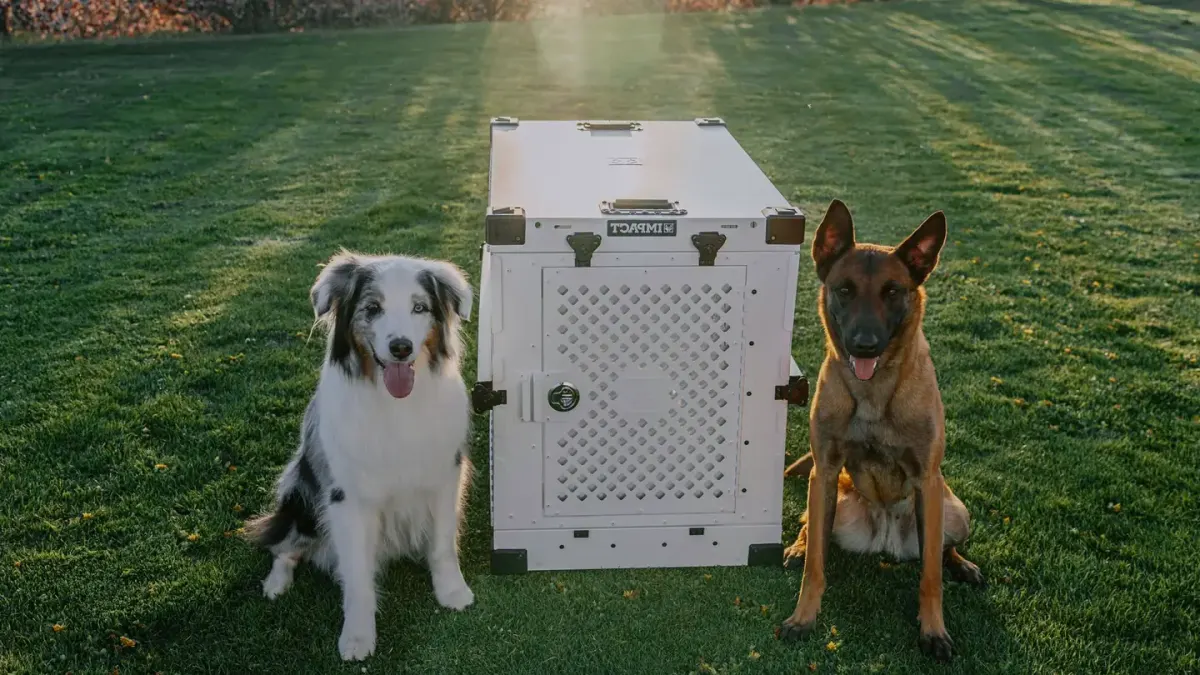
- Secure the crate, not just the dog. A crate in the back seat or cargo area, strapped down so it can’t slide or tip, keeps a healing dog from being thrown around on a hard stop.
- Use a ramp or steps for entry and exit. No jumping in or out of the car, ever, until cleared.
- Plan the stops around the incision, not the mileage. Short, calm leash walks on a flat surface beat a long highway stretch followed by an excited bathroom sprint.
- Pack the e-collar or recovery suit. Hotel carpets and new smells are exactly when a dog is most tempted to lick a healing site.
- Watch for motion sickness on top of surgery. A dog that’s nauseated from the car on top of incisional pain is a dog that won’t rest. Motion Sickness in Dogs: VCA Animal Hospitals notes that veterinary-specific options like maropitant are labeled specifically to prevent vomiting in dogs, and should be discussed with your vet before combining with any post-op pain medication.
The case for waiting, and the counterargument I still hear
I’ve had owners push back on postponing a trip, and I understand it — flights are non-refundable, hotel deposits are lost, family is waiting. The strongest counterargument is that plenty of dogs travel fine a few days post-op with no visible problem. That’s true, and I won’t pretend otherwise. But “no visible problem” isn’t the same as “no risk.” An incision that looks closed on day four can still be pulled open by a hard jump onto a tailgate, and by the time you notice, you’re troubleshooting a wound infection in an unfamiliar city, away from the surgeon who knows the case. I land on the side of waiting for clearance, even when it costs a deposit, because the alternative costs a second surgery.
I remember a corgi named Biscuit, five years old, about 28 pounds, who’d had a leg incision closed nine days before her owners drove her four hours to a lake house. They’d done everything right — ramp for the car, crate strapped in the back seat, short leash walks only. What caught them off guard was the dock: low, wooden, with a six-inch step down that Biscuit hopped without thinking twice. No damage done, as it turned out, but her owner called me from the car that afternoon, worried sick, because that one small jump was the thing nobody had planned for. It’s rarely the big obvious risks that catch owners off guard on a trip. It’s the six-inch step they didn’t think to flag.
If you’re prepping gear for the trip itself, our guide to collapsible bowls and feeding gear for traveling dogs covers packing for a recovering appetite, and if this is a first-time flyer situation on top of surgery, airline pet policies is worth reading before you book anything. For dogs healing from smaller-frame injuries, traveling with a small dog vs a large dog has notes on crate sizing that apply directly to post-op setups too.
Where I land
Travel after surgery isn’t a hard no. It’s a “not yet, and then carefully.” Get the written clearance, secure the crate like it’s cargo, skip the jumps and stairs you’d normally ignore, and pack for nausea as seriously as you pack for the incision itself. The dogs who do best on the road post-surgery aren’t the ones whose owners were the most cautious in general — they’re the ones whose owners planned the trip around the wound, not around the itinerary.
In short: clear the incision before you clear the itinerary.
Frequently asked questions
How soon after surgery can a dog travel by car?
It depends on the procedure, but most soft-tissue surgeries call for restricted activity for about 7 to 10 days, and your surgeon's clearance should come before any travel plans, not after.
Can I give my dog something for motion sickness on top of pain medication?
Possibly, but check with your vet first — some anti-nausea medications and post-op pain medications can interact, so this isn't a decision to make without a call to the clinic.
What's the biggest travel risk for a healing incision?
It's usually not the drive itself but the small moments around it — jumping out of the car, hopping onto furniture, or a step down a dock or curb that nobody planned for.
Sources
- Post-Operative Instructions in Dogs — VCA Animal Hospitals
- Anesthetic and Surgical Considerations — AAHA
- Motion Sickness in Dogs — VCA Animal Hospitals