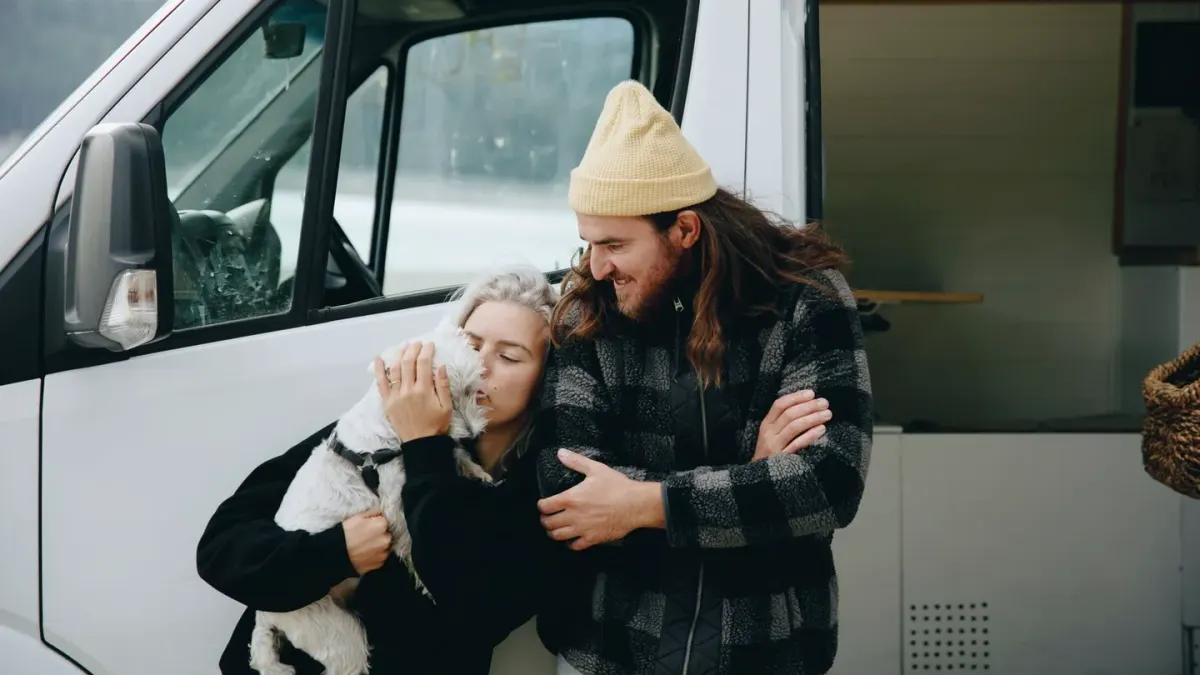
Your van can feel roomy to you and tiny to your dog, because you get the view and your dog gets the vibration, heat, and waiting. I counsel clients to plan a van weekend around that mismatch first, then pack. When baseline comfort and predictable routine are steady, normal travel stress may be easier for many dogs to handle, and behavior stays more readable all weekend.
My own trial run taught me that lesson fast. I borrowed a friend’s converted Sprinter for two nights near Joshua Tree with a 4-year-old, 48-pound mixed-breed dog who is usually bombproof at home. Day one looked perfect until we parked for lunch and the interior climbed 12 degrees in 20 minutes with the doors cracked. She panted, paced the bench, then refused her kibble until we moved to shade, opened the roof vent, and ran a battery fan for an hour. That single temperature swing changed how I pack, park, and schedule every van trip since.
The limitation your build photos will not show
Vans trap heat and movement even when they look airy. Insulation, dark paint, and low airflow can turn a comfortable parking spot uncomfortable quickly, especially for brachycephalic breeds, seniors, and puppies who regulate temperature less efficiently. The American Veterinary Medical Association reminds owners never to leave pets alone in parked vehicles when heat is a risk, and that principle applies to a van with cracked windows too.
Parked shade moves. Sun angle, wind, and pavement heat shift through the day.
That is why I want you to test ventilation at home before you test scenery. Sit in the parked van with your dog for 30 minutes at midday, note panting, restlessness, or seeking the floor, and adjust fans, shade cloths, andcrate placement now.
Myth vs. reality: “dog-friendly” parking is not dog-safe rest
A lot labeled pet-friendly may mean dogs are allowed, not that it supports normal drinking, resting, and elimination. The National Park Service notes that many park buildings, trails, and hot pavement areas remain off-limits or unsafe for pets, which surprises first-time van campers who assumed public land equals open access.
Reality is more hands-on. You are your dog’s shade, water station, and quiet zone. I pack as if no stop will have what we need, then I am pleasantly surprised when one does. That mindset also keeps confinement low-stress, which may help support normal posture and appetite on the road.
For overnight manners in tight quarters, borrow ideas from my guide to hotel room setup for first-timers and the etiquette for pet-friendly rentals. The surfaces change, the expectation does not: same bed, same cues, same calm entry.
Mid-trip is where most checklists fall apart, and I saw it on a two-night coastal loop with a lanky 18-month-old shepherd mix who had never slept in a vehicle. The owner did everything right on paper — long beach walk, dinner, then lights out — but tried to compress three potty walks into one late-night outing to avoid opening the sliders after dark. By 2 a.m. the dog was whining, circling on his mat, and drooling on the bedding. They switched to four short leash walks across the second day instead of two long ones, added a midnight potty break with a headlamp, and he finally settled through night two without vocalizing.

The weekend sequence that actually works
Think in loops, not miles. Drive, sniff, drink, rest, repeat. Keep drive legs under three hours when you can, and build the day around your dog’s usual meal and sleep times rather than trailheads.
Start with safety anchoring. A crash-tested crate or harness, secured so it cannot slide, gives your dog a predictable place when doors open and close. The Centers for Disease Control and Prevention advises securing pets with a carrier or harness and packing health records, food, water, and waste supplies for travel, which is a solid baseline for van life too.
Water deserves its own plan. Bring water from home plus a sealed backup jug, a no-spill bowl, and a familiar collapsible bowl for walks. Offer small amounts at each stop rather than one big bowl after a long drive, and watch for normal urination, moist gums, and willingness to settle. If intake drops, move to shade, cool the floor mat, and offer again in 20 minutes before you worry.
Food and sleep stay boring on purpose. Same food, same chew, same blanket in the same corner. Feed after a potty walk, not right before a twisty road, and keep evening light low so the van reads as bedroom. A white-noise app or fan hum may help support restful behavior when campground noise spikes.
Pack for containment and cleanup. Long line, spare leash, tie-out stake only where allowed and supervised, enzyme cleaner, towels, poop bags, tick remover, current ID tags, and a printed vaccine summary. I also bring a thermometer and my vet’s after-hours number, because early heat stress looks like simple excitement until it does not.
The last story is the bend in the rule. An 11-year-old, 22-pound terrier mix with stiff hips joined his family for a single night in a high-roof van parked in a driveway — a practice run, not a real trip. Standard advice says more exercise before bed, but after a 0.6-mile evening stroll he was sore, reluctant to step over the wheel well, and kept standing instead of lying down. The owners skipped the morning hike plan, laid his orthopedic pad on the floor instead of the platform bed, added a non-slip runner to the ramp, and kept him to brief yard sniffs 50 feet from the van. He slept six straight hours, which told us comfort beat mileage for that body.
Expectation first: most dogs need one full trip to learn van rhythm. Keep the first weekend short, close to home, and easy to abort. If appetite, thirst, and play bounce back within a day home, you read the weekend right.
What would change if you planned the van around your dog’s worst hour, not your best photo?
Frequently asked questions
How long can my dog stay in a parked van?
Treat a van like a car: avoid leaving your dog alone in a parked van, especially in warm or sunny conditions, and always prioritize shade, ventilation, and supervision.
What should I pack for water and food?
Bring familiar food, water from home plus backup, no-spill and travel bowls, and keep meal times consistent to support normal digestion and routine.
How do I help my dog sleep in the van?
Use the same bed and blanket in the same spot, dim lights early, add fan hum for background noise, and keep a final potty walk predictable.
Sources
- Traveling With Your Pet — American Veterinary Medical Association
- Pets in National Parks — National Park Service
- Travel With Pets — Centers for Disease Control and Prevention