On this page
The limitation that surprises most clients isn’t the number on the thermometer. It’s how fast the number stops mattering.
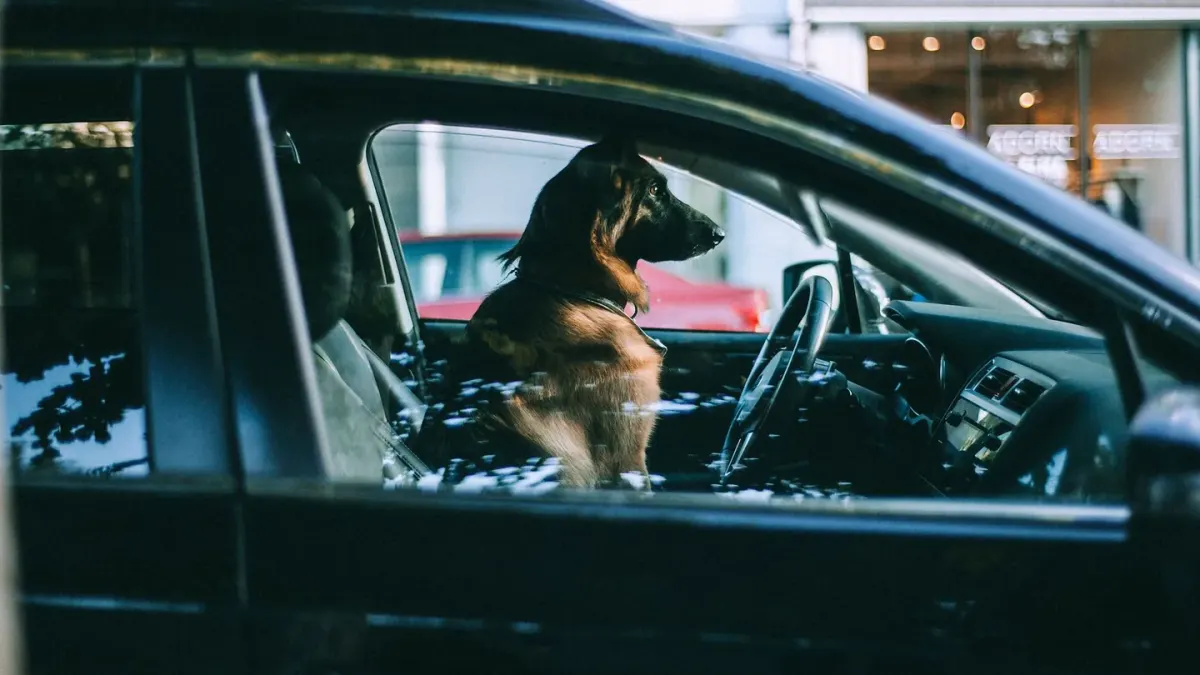
I’ve had the same conversation more times than I can count, usually with an owner who ran into a gas station for “two minutes, tops.” They want a rule: a temperature line, a time limit, something they can plan a road trip around. I understand the impulse — it would make travel easier. But the honest clinical answer is that there isn’t a safe cutoff, because a parked car doesn’t behave like the outside world. It behaves like a greenhouse, and the greenhouse effect starts working against your dog almost immediately.
Myth vs. reality: what actually happens inside a parked car
The myth is that a car stays roughly as hot as the air outside, so a 70-degree day is fine and a 95-degree day is the danger zone. The reality, backed by research from meteorologist Jan Null at San Jose State University, is that the interior of a parked car can climb to 110°F within 20 minutes on an 88°F day, and to 124°F within an hour, according to the American Veterinary Medical Association. Even a car parked in the shade or with windows cracked isn’t meaningfully protected. That’s the part clients resist the most — they picture the cracked window as a safety valve, and it just isn’t one at that scale of heat.
A dog can’t cool itself the way you can. Dogs don’t sweat through their skin; they rely on panting and, to a much smaller degree, the pads of their feet, and both of those cooling routes lose effectiveness fast in trapped, superheated air. That’s a structural limitation of canine thermoregulation, not a matter of a particular dog being tough or sensitive.
What heatstroke actually looks like — and why the margin is thin
A dog’s normal body temperature runs about 101 to 102°F. Heatstroke risk begins once a dog’s internal temperature climbs past that baseline into the 105–106°F range, and dogs in true heatstroke are often measured well above 107°F, per PetMD. That’s a margin of only a few degrees between normal and dangerous, and in a hot car it can be crossed in minutes, not hours.
Early signs I ask owners to watch for on any warm-weather trip: heavy, frantic panting, drooling that seems excessive, bright red or purple gums, wobbliness, and a dog that just seems “off” — restless, then suddenly listless. Left unaddressed, this progresses to vomiting, collapse, seizures, and can be fatal; heatstroke is classified as a true medical emergency by veterinary institutions including Cornell University College of Veterinary Medicine: Cornell University’s College of Veterinary Medicine. If you see these signs, the move is to get the dog into shade or air conditioning and to a veterinarian immediately, not to wait and see.
One case has stuck with me for years. A client brought in a 6-year-old Labrador, about 70 pounds, after what she described as a “quick errand” — she’d left him in the car with two windows cracked while she picked up a prescription, maybe 15 minutes on a mild 78-degree afternoon in early June. When she came back out, he was drooling heavily and pacing the back seat instead of greeting her at the window like usual. By the time she got him to us, his gums had gone a dusky red and his breathing was labored. He recovered with fluids and active cooling, but it took the better part of that evening, and she was shaken for weeks afterward — not because she’d been careless, but because 78 degrees hadn’t felt like a “hot car” day to her at all. That’s the gap I try to close with every client: the outside temperature you feel is not the temperature your dog is sitting in.
A practical sequence for road trips instead of a temperature chart
Rather than trying to memorize a chart of outside temperature versus minutes-to-danger, I coach clients through a sequence that removes the guesswork:
- Plan stops around the dog, not around convenience. Before you leave, map gas stations, rest areas, and restaurants with outdoor seating or drive-throughs so you’re never choosing between a bathroom break and leaving the dog behind.
- Default to “the dog comes in” or “someone stays in the car.” If a stop can’t accommodate the dog and no one can stay with the air conditioning running and the engine attended, skip that stop.
- Watch the dog, not just the clock, on the road itself. Car sickness, restlessness, or excessive drooling en route are worth addressing before you ever reach your destination — if your dog struggles with car rides generally, it’s worth reading up on how to make car rides less stressful for your dog before a long trip, not during one.
- Keep the restraint appropriate to the vehicle, not just comfort. A well-fitted crate or harness restraint matters for safety in general, and if you’re still deciding between options, dog car seat belt vs crate vs barrier is worth reviewing before the trip, not after an incident.
- Build in water and shade breaks on the actual drive, not just at the final destination, especially for short-nosed breeds and older dogs whose panting is already less efficient.
Where I land, and the counterargument I won’t dismiss
My position is blunt: there is no temperature at which it’s fine to leave a dog alone in a parked car, and I’d rather a client over-plan their route than lean on a mental chart of “safe” minutes. The strongest counterargument I hear is practical — sometimes there’s genuinely no one to stay with the dog and no pet-friendly stop nearby. I don’t dismiss that; travel logistics are real. But the answer to that problem is trip planning done in advance, not a riskier judgment call made in a parking lot. If you want the fuller data picture on why “just a few minutes” isn’t a safe bet, is it ever safe to leave a dog alone in the car walks through what the numbers actually say.
Quick recap
There isn’t a magic number that makes a hot car safe for a dog, even briefly, and cracked windows barely slow the rise. Watch for heavy panting, drooling, and dark gums as early heatstroke warning signs, and treat any of them as an emergency. The real fix is a trip plan that never puts your dog in that position — routing around dog-friendly stops, not gambling on the clock. If your dog is still new to car travel altogether, it’s worth starting with the basics in how to get a puppy used to car rides so hot-weather trips aren’t the first time they’re stressed in the back seat.
Frequently asked questions
Is it ever okay to leave a dog in the car with the AC running?
Only if a person stays with the vehicle and can monitor both the dog and the AC system — cars can overheat, systems can shut off, and a dog left genuinely alone in a running car isn't being supervised.
Does parking in the shade make a real difference?
It helps somewhat but doesn't create a safe window on its own; shaded cars still heat well beyond outside air temperature, and shade can shift as the sun moves.
How fast can heatstroke set in?
It can develop in minutes in a hot car, and the difference between a normal body temperature and a dangerous one is only a few degrees, so there isn't much margin for "I'll just be quick."
Sources
- Pet safety in vehicles — American Veterinary Medical Association
- Heatstroke in Dogs: Signs, Treatment, and Prevention — PetMD
- Heatstroke: A medical emergency — Cornell University College of Veterinary Medicine