On this page
Why does a dog who happily jumps into the car at eight weeks old suddenly plant all four feet and refuse at eight months? Owners ask me this constantly, and the honest answer is that it’s rarely one thing. It’s drool on the seat, a stomach that never quite settled last time, and a body that’s now bracing for a repeat.
I remember a fourteen-pound terrier mix named Biscuit, about a year and a half old, whose owner brought her in because she’d started shaking and refusing to get in the car for anything short of the dog park. The turning point had been a thirty-minute highway drive to a groomer three months earlier — Biscuit vomited twice, and by the third ride afterward she was drooling before the car door even opened. What her owner first noticed wasn’t the vomiting itself but that Biscuit started avoiding the garage door entirely, pacing near the kitchen instead of following her usual routine of trotting straight to the car. We worked backward from there: short, food-paired trips around the block, no destination attached to anything stressful, for about two weeks before we reintroduced longer drives. By week four she was getting in on her own again.
Is it fear, nausea, or both?
Most dogs who struggle in the car are dealing with some combination of motion sickness and learned anxiety, and treating only one half of that equation is why so many “car anxiety” fixes fail. According to VCA Animal Hospitals, motion sickness in dogs is thought to result from conflicting signals reaching the vestibular system in the inner ear, and fear of the vehicle itself can be a contributing factor even when the car isn’t moving. That second part matters more than owners expect — a dog who once got sick on a drive can start showing stress signs the moment the car door opens, long after the nausea itself would have resolved.
That’s the myth I try to correct first: that a “car sick” dog just needs a different treat or a cracked window. Sometimes the nausea has already passed, and what’s left behind is the anticipation. If you want the deeper mechanics of why some dogs generalize a bad ride into full-blown avoidance, our piece on why does my dog hate the car walks through that behavioral side in more detail, and why does my dog get car sick covers the physical side.
The sequence I actually walk owners through
I don’t hand out a single tip. I give a sequence, because car anxiety rarely resolves from one change.
Before you ever turn the key
Start with the car parked and the engine off. Feed a few pieces of your dog’s regular food inside the vehicle, then let him leave. Do this for several short sessions before you add any motion at all. The goal is to disconnect “car” from “something bad is about to happen,” and that association takes repetition, not a single good afternoon.
The first real drives should be boring
Keep the earliest moving trips under five minutes and end them somewhere unremarkable — not the vet, not the groomer. A loop around the neighborhood that ends back at home teaches your dog that car rides don’t automatically lead to something unpleasant. Extend the distance gradually, and watch for early stress signals — lip licking, yawning, a tucked tail — rather than waiting for vomiting or barking to tell you it’s too much.
If nausea looks like the bigger piece
Withhold a large meal for a couple of hours before travel, but don’t send your dog off with an empty stomach either — a light snack an hour or so before departure tends to sit better than nothing at all. Crack a window slightly for airflow and equalize the pressure your dog feels. If you’ve tried the behavioral groundwork and nausea is still the dominant problem, that’s a conversation for your veterinarian, not a guessing game with over-the-counter products.
Does the restraint you choose actually calm a dog down?
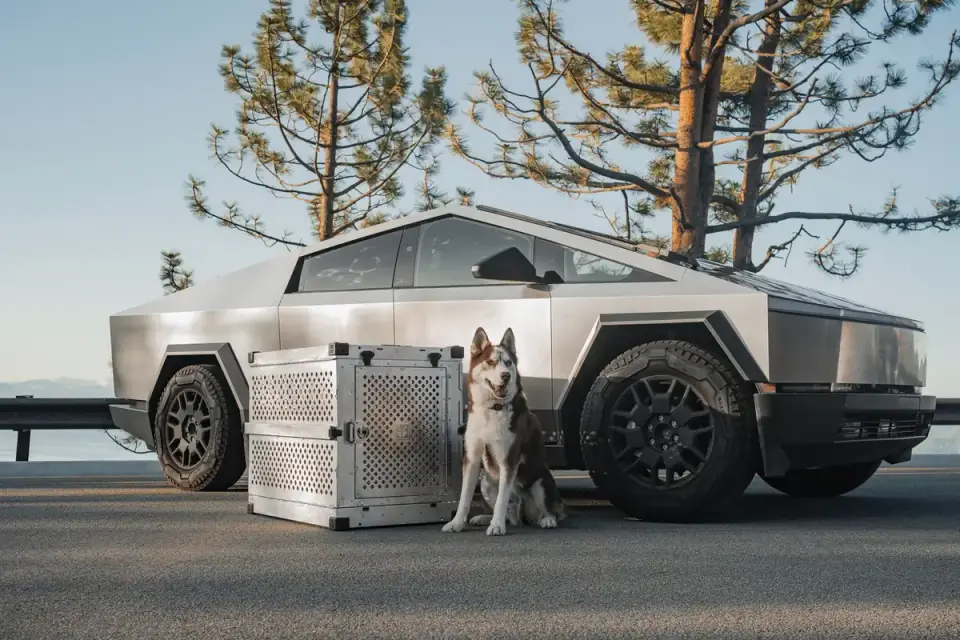
This is where I get pushback, because a lot of owners assume any harness or crate accomplishes the same thing. It doesn’t. A restraint that lets a dog slide across the seat on every turn or brake adds a physical startle to whatever anxiety is already there, and dogs learn from that fast. The Center for Pet Safety has run independent crash testing on pet travel harnesses since its original pilot study, and the findings exposed real, measurable differences in how well common restraints actually keep a dog stable and contained during hard stops — not just in a collision, but in the everyday jostling that makes a nervous dog more nervous. I’d rather a client spend money on a restraint with real testing behind it than on another calming chew, because the stability itself does some of the calming work.
If you’re deciding between a crate, a harness-and-seatbelt setup, or a barrier, our comparison of seat belt vs crate vs barrier breaks down the trade-offs by dog size and temperament, and our crash-test ratings guide goes deeper into which products have actually been tested rather than just marketed as safe.
The AVMA is direct about this too: pets riding loose in a moving vehicle is unsafe, and the back seat, properly restrained, is the safest position for any dog in transit. That’s not just a safety rule — a securely restrained dog also has less physical reason to panic when the car moves unpredictably.
What I tell owners who want the fast fix
I understand the appeal of a pheromone spray or a calming chew as the whole plan. Sometimes they help at the margins, as one piece of a bigger routine — I’m not dismissing them. But I’ve watched too many owners spray the crate, skip the desensitization work entirely, and end up back in my exam room three months later with a dog who’s gotten worse, not better, because the underlying association was never actually addressed. Products can support a plan. They rarely substitute for one.
My recommendation, and the trade-off I won’t pretend away
Here’s where I land: build the desensitization sequence first, invest in a restraint that’s actually been tested rather than just labeled “car safe,” and treat nausea as a separate, solvable piece rather than assuming it’s the whole story. The honest trade-off is time — this isn’t a same-day fix, and owners who need their dog road-ready for a trip next week are going to be frustrated by that answer. I still give it, because the alternative — a dog who dreads every car door for years — costs a lot more than two or three weeks of short, boring drives.
I think back to a client with a seven-year-old Lab mix who’d been “car sick her whole life” by the time they came to me — years of white-knuckle drives, towels on every seat, a dog who trembled from the driveway to the destination. We started from zero: engine-off feeding sessions, then five-minute loops, then a properly fitted harness swapped in for the loose leash-clip setup they’d been using. Six weeks later the owner texted me a video of the dog jumping into the car unprompted for a vet visit — not a dramatic cure, just a dog who’d stopped bracing for the worst. That’s usually what success actually looks like: quieter, not perfect.
Frequently asked questions
How long does it take to reduce a dog's car anxiety?
Most dogs show real improvement within two to six weeks of consistent, short desensitization sessions, though dogs with a longer history of bad rides may need more time.
Should I feed my dog before a car ride?
Avoid a large meal right before travel, but a light snack an hour or so beforehand often sits better than an empty stomach — adjust based on how your dog responds.
Is a harness or a crate better for a car-anxious dog?
It depends on your dog's size and temperament; what matters most is choosing a restraint that's been independently tested rather than assuming any harness or crate performs the same in a sudden stop.
Sources
- Traveling with your dog or cat — AVMA
- Motion Sickness in Dogs — VCA Animal Hospitals
- 2011 Harness Pilot Study — Center for Pet Safety