
On this page
Crash data in passenger vehicles consistently show unrestrained pets increase injury risk for both animals and people, which is why restraint choice matters before comfort upgrades.
A four-year-old Labrador, 68 pounds, came in for a pre-trip check before a 900-mile drive in a midsize SUV. She panted through the whole exam room visit, stood with a tucked tail when her owner described the new extra-large wire crate, and had vomited on two prior two-hour drives. We measured her at 24 inches at the shoulder, rehearsed short crate sessions at home, and switched the plan to a smaller airline-style crate with a non-slip mat and a frozen lick mat for departures. Within 10 days her owner reported she was lying down within 5 minutes of loading instead of standing and drooling for the full ride.
That shift captures my position: containment alone is not the goal. A crate should limit excursion during a sudden stop, maintain ventilation and a stable resting posture, and support calm behavior through predictability. If peer-reviewed crash testing showed wire crates performed as well as structural crates for large dogs, I would change that recommendation. Right now it does not.
The Size Chart Gets It Backward
Most charts sell volume. Physiology needs posture. Your dog should be able to stand without crouching the neck, turn comfortably, and lie in sternal or lateral recumbency with the head resting. Extra headroom above the ears looks generous in the garage and becomes a projectile arc in a 30-mph stop.
Measure height at the withers, length from nose to tail base, and width across the shoulders. Then measure your cargo area with the second row in its travel position, accounting for wheel-well taper and the slope of the liftgate. Many SUV crates fail here, not on paper dimensions but on the 2 to 3 inches lost to angled glass. The American Veterinary Medical Association reminds owners that ventilation, temperature control, and secure restraint in vehicles are baseline safety needs, not accessories.
Ventilation deserves equal weight. Brachycephalic breeds, seniors, and anxious panters build heat fast in an enclosed cargo bay. Look for airflow on three sides, a door that latches without rattling, and walls that do not flex when you press from inside.
Wire Versus Structural Walls: The Myth That Roomy Means Safer
The myth is that a big open wire crate feels kinder and therefore travels better. The reality is that flexibility and noise often raise arousal. Dogs read vibration through their paw pads and vestibular system, and a rattling panel paired with sliding on a plastic tray can keep the stress response engaged for the whole trip.
A client learned this on a lake weekend with a tall wire crate bungeed to cargo hooks. By mile 40 the crate had shifted 6 inches toward the liftgate, the tray was squeaking, and her young shepherd mix was standing, whining, and refusing treats he normally loved. She shortened the drive, removed the bungees, and borrowed a structural crate with a narrower footprint and lockable door for the return. Same dog, same SUV, same bedding. He lay down before they reached the highway.
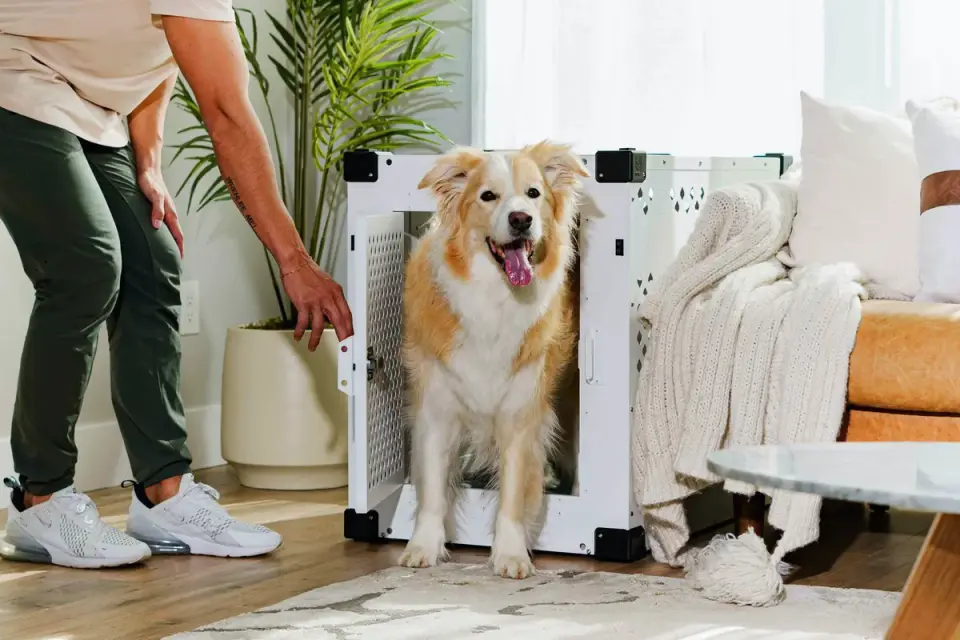
Structural plastic, aluminum, and crash-tested composite crates cost more and weigh more. They also hold their shape, dampen sound, and accept tie-down straps without bending. That is a trade-off I counsel owners to accept for highway travel.
What Crash Testing Actually Tells You
No federal standard governs pet crates the way it governs child seats. Independent testing is the closest proxy we have. The Center for Pet Safety has published crate and carrier test protocols and failure observations that show how doors, latches, and plastic walls behave under load, and those videos changed how I counsel on tie-downs.
My evidence-bounded recommendation is this: choose a crate with independent crash-test documentation in your dog’s size range, secure it with manufacturer-rated straps to factory anchor points, and keep the crate low and centered over the axle when possible. A barrier alone may help support separation in the cargo area, but it does not replace a secured enclosure for limiting forward movement.
Short sentences help here.
Expectation first: even the best crate does not make a dog crash-proof. It may help support lower injury risk by reducing secondary impact and ejection.
A Practical Sequence That Works in an SUV
Skip the parking-lot install the morning you leave. Dogs learn context fast, and a rushed first loading teaches that the crate predicts a long, strange day.
Start with fit in the driveway. Place the empty crate, check door swing against the liftgate, confirm you can still reach the emergency release, and lie a yoga mat underneath to test for rock. Then train the behavior inside the house for 5 to 7 days: meals in the crate, door open, then door closed for seconds while you feed through the bars. Keep sessions under 10 minutes and end while your dog still wants more.
The American Kennel Club outlines similar crate-training progression and sizing basics that pair well with vehicle-specific practice like idling in the driveway with the hatch open.
Then add motion in layers. Idle engine, short loop around the block, then a 20-minute errand with a calm helper riding behind to observe posture, drooling, vocalizing, and recovery time after unloading. If panting persists beyond 15 minutes at home base, pause and revisit ventilation, temperature, and baseline anxiety before adding mileage. For restraint comparisons, see Dog Car Seat Belt vs Crate vs Barrier: Which Restraint Is Safest? and review feeding timing in Collapsible Bowls and Feeding Gear for Traveling Dogs. If you are new to road routines, Getting Started With Dog Travel: A Practical Prep Guide lays out the prep order I use in clinic.
Then there is the trip where the textbook answer has to bend. A 12-year-old arthritic cattle-dog mix needed a five-night move with his family, and he could no longer step over a high crate threshold or hold a down-stay on slick plastic. We lowered the criteria: a low-entry structural crate with the door removed, placed on folded cargo carpet, secured on three sides with the rear seat folded, plus potty and stretch breaks every 2 hours and his orthopedic pad from home. He rode with his head out the open door frame, stood without slipping, and slept between stops. Containment mattered less than joint comfort and footing.
Pack water from home, a spare leash, records, and ID. Review Dog ID Tags and Records: How to Prepare Before You Travel before you load.
prevention beats improvisation on travel day, and a crate your dog already trusts is the quietest safety device in your SUV.
Frequently asked questions
What size SUV crate does my dog need?
Choose a crate your dog can stand, turn, and lie down in without crouching, then confirm it fits your actual cargo footprint with seats in travel position and the liftgate closed.
Are wire crates safe for SUV travel?
Wire crates contain but flex, rattle, and rarely have crash-test documentation; a secured structural crate with three-side ventilation usually travels calmer and holds position better.
How do I secure a crate in an SUV?
Use manufacturer-rated straps to factory tie-downs, center the load low over the axle, add non-slip matting underneath, and check for shifting after the first 15 minutes of driving.
How long does crate training take before a road trip?
Plan 1 to 2 weeks of short positive sessions at home, then layered vehicle practice from idling to short drives before a long highway day.
Sources
- Pets in Vehicles — American Veterinary Medical Association
- Pet Safety Research and Test Protocols — Center for Pet Safety