On this page
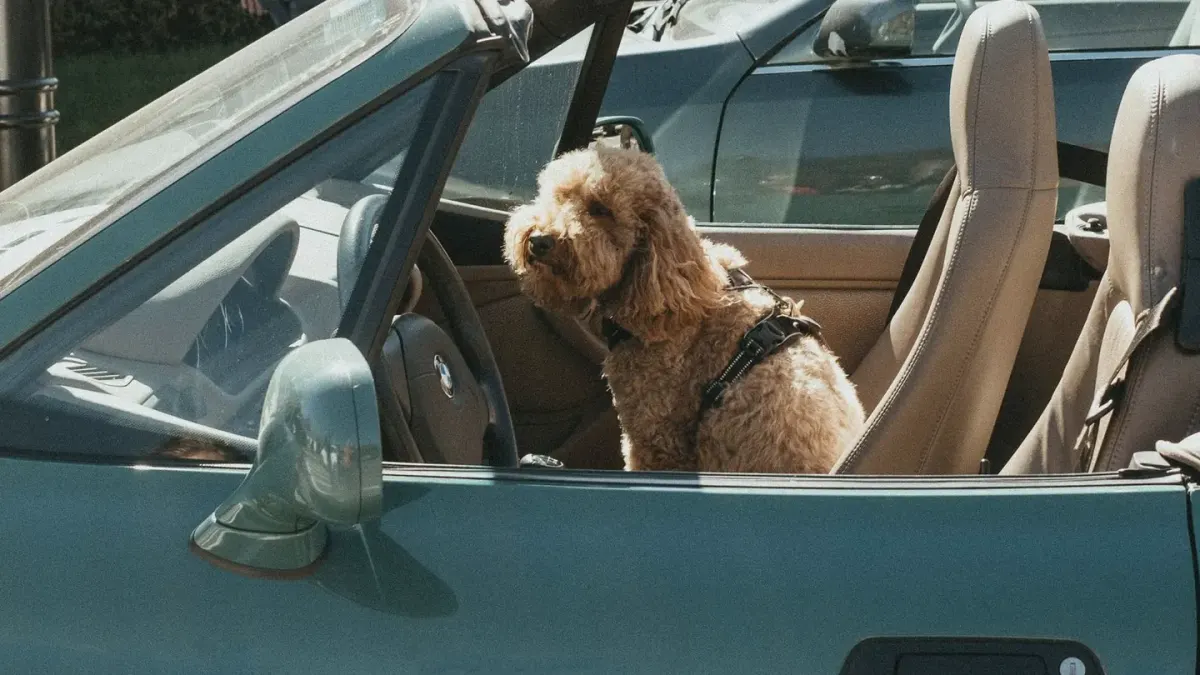
Scout, a four-year-old, 58-pound Australian shepherd, used to spend every car ride the same way: front paws on the console for the first mile, then a slow migration to the back window ledge, then — somewhere around mile ten — back into the footwell, panting, drooling on the floor mats. His owner had tried a seatbelt attachment clipped to his everyday flat collar. It slowed him down for about a week. Then he learned he could back out of it at a stoplight.
I hear a version of this story constantly. Owners come in describing a dog who “just won’t settle” in the car, as if the dog is being stubborn. In my practice, that’s rarely what’s actually happening. A dog who won’t stop moving in a moving vehicle is usually solving a problem — motion sickness, poor sightlines, an unstable surface, or straight-up anxiety — with the only tool available to them, which is repositioning. Fix the setup, and a lot of that “misbehavior” disappears on its own.
The Behavior Problem Isn’t Really a Behavior Problem
Before you buy anything, it’s worth separating out why your dog is moving, because the fix is different depending on the cause. A dog sliding side to side on a slick seat during turns is dealing with a friction problem, not a discipline problem. A dog who climbs to the front, into your lap, or against the window is often seeking either your reassurance or a wider field of view because the back seat feels unstable and closed-in. A dog who paces, drools, or yawns repeatedly may be nauseated, and no restraint on earth will make a nauseated dog hold still.
This matters because a stronger tether doesn’t solve motion sickness, and a calming wrap doesn’t solve a seat that turns into a Slip ‘N Slide on every curve. You generally need to address the physical setup and the emotional or physiological piece separately.
Myth vs. Reality: What Actually Keeps a Dog Still
The myth is that any harness clipped to a seatbelt equals safety and stillness. The reality, according to independent crash testing, is that most products on the market don’t hold up. Center for Pet Safety ran a crashworthiness study on eleven harness brands using the same federal crash-test protocol used for child safety seats, and only one of them met the full set of pass criteria — no catastrophic strap failure, consistent performance across sizes, the dog staying on the seat through the impact, and a tether short enough to limit forward travel. That’s a sobering pass rate, and it tells you that “sold as a car harness” and “actually limits movement in a real event” are not the same claim.
The second myth is that restraint is optional if your dog is well-behaved. The American Veterinary Medical Association is blunt on this point: it’s unsafe for pets to ride loose in a vehicle regardless of temperament, and the safest position is the back seat, properly restrained — never the front seat with an active airbag, and never on a lap. An unrestrained dog isn’t just a comfort risk; in a sudden stop it becomes a projectile that can hurt the driver, other passengers, and itself.
The Sequence I Walk Owners Through
I don’t hand every client the same product. I walk them through a short sequence instead, because the right fix depends on the dog’s size, the vehicle, and why the dog is moving in the first place.
Start with the surface. A textured, non-slip seat cover or cargo liner removes a huge amount of the sliding that gets misread as anxiety or restlessness. It’s the cheapest fix and the one owners skip most often.
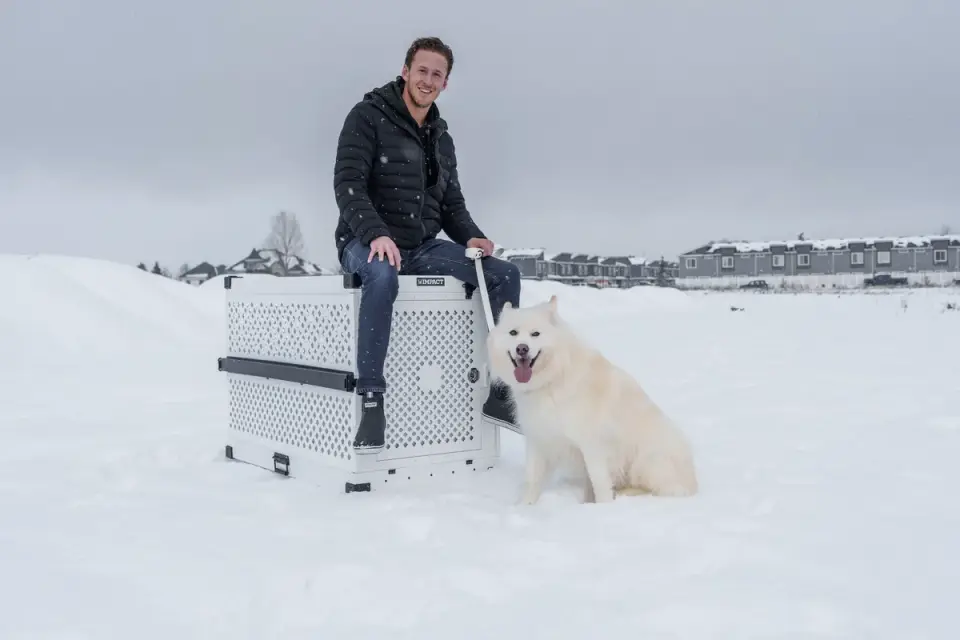
Next, pick one restraint system and commit to it — don’t mix a harness with loose freedom “just for short trips,” because dogs generalize inconsistently, and a habit of climbing forward on short drives shows up on long ones too. For most dogs, a crash-tested harness anchored to the seatbelt, a secured crate, or a cargo barrier are the three real options, and each has trade-offs in space, cost, and how much the dog can still shift position. For the fuller side-by-side breakdown of those trade-offs, see our comparison of restraint types, which walks through which option fits which dog and vehicle.
Then build tolerance before you need it. Clip the harness or load the crate in the driveway with the engine off. Reward calm. Take a five-minute loop before a five-hour one. Dogs who are only ever restrained on stressful, novel trips associate the restraint itself with stress, which defeats the purpose.
Finally, check the fit and the anchor point, not just the label. A harness that’s crash-tested but loose enough for the dog to back out of, like Scout’s original setup, isn’t functioning as designed. The tether length matters too — six inches or less of slack is a reasonable benchmark, since a longer tether lets a dog build enough momentum to be injured even while technically “restrained.”
What I Tell Owners About the Middle Ground
One of the dogs I worked with, a nine-year-old, 14-pound dachshund named Biscuit, had a car seat with a raised bolster and a leash clip built in — the kind of product marketed as a full solution. His owner assumed it was equivalent to a crash-tested harness. It wasn’t; it was a comfort and containment product, not a tested restraint system, and there’s a meaningful difference between “my dog can’t easily jump out” and “my dog is protected in a collision.” I told her what I tell most owners with small dogs: a booster-style seat can genuinely stop the climbing and pacing behavior, which is a real quality-of-life win on long drives, but if crash protection is the priority, layer in a crash-tested harness clip inside that seat rather than relying on the bolster and leash clip alone. Comfort gear and safety gear solve overlapping but different problems, and conflating them is one of the most common mistakes I see in exam-room conversations about car setups.
That gap between “keeps them from jumping around” and “protects them if something goes wrong” is exactly where a lot of well-meaning owners get misled by product marketing, and it’s worth asking that question about anything with straps before you buy it.

Where I Land, and the Trade-Off I Won’t Pretend Away
My honest recommendation, for most dogs and most vehicles, is a crash-tested harness anchored short to the seatbelt for dogs over roughly 25 pounds, or a secured, appropriately sized crate for dogs who do better contained than tethered. The counterargument I hear most is cost and hassle — a genuinely tested harness runs more than the flat-collar clip most people already own, and a crate takes up real cargo space. I still land on tested restraint over the cheaper option, because the AAA Southern California survey found that 83 percent of dog owners already agree an unrestrained dog is dangerous in a moving car, yet only 16 percent actually use any restraint — that gap between belief and behavior is where injuries happen, not from owners who never knew better.
Scout eventually settled once his owner switched him to a harness anchored to the cargo-area seatbelt with a short tether and added a rubber-backed liner under him. He still shifts his weight on turns. He doesn’t climb the console anymore. That’s a realistic bar to aim for — not a dog frozen in one position for six hours, but a dog who has a stable, secure spot and no physical reason to leave it.
If your dog’s movement looks more like restlessness and drooling than curiosity, it’s worth reading through how to make car rides less stressful for your dog alongside this piece, since nausea and anxiety often masquerade as a restraint problem. And if you’re starting from scratch with a young dog, how to get a puppy used to car rides covers the conditioning work that makes any restraint easier to introduce. For the harder data on which products actually hold up in an impact, our crash-test ratings for dog car restraints breakdown is the next stop.
Frequently asked questions
What's the fastest way to stop a dog from climbing into the front seat?
Remove the option physically — a cargo barrier or a short-tethered harness anchored in the back seat prevents forward movement regardless of how motivated the dog is to reach you.
Is a seatbelt clip on a regular collar enough?
No. A flat collar isn't built to distribute crash force, and dogs can often back out of one, as Scout did. Use a harness designed and tested for vehicle restraint instead.
Sources
- 2013 Harness Study Results — Center for Pet Safety
- Pet safety in vehicles — American Veterinary Medical Association
- 31 Percent in New AAA Survey Admit to Being Distracted by Their Pet While Driving — AAA Southern California